Georges Island - Deportation Point for the Guédry Family
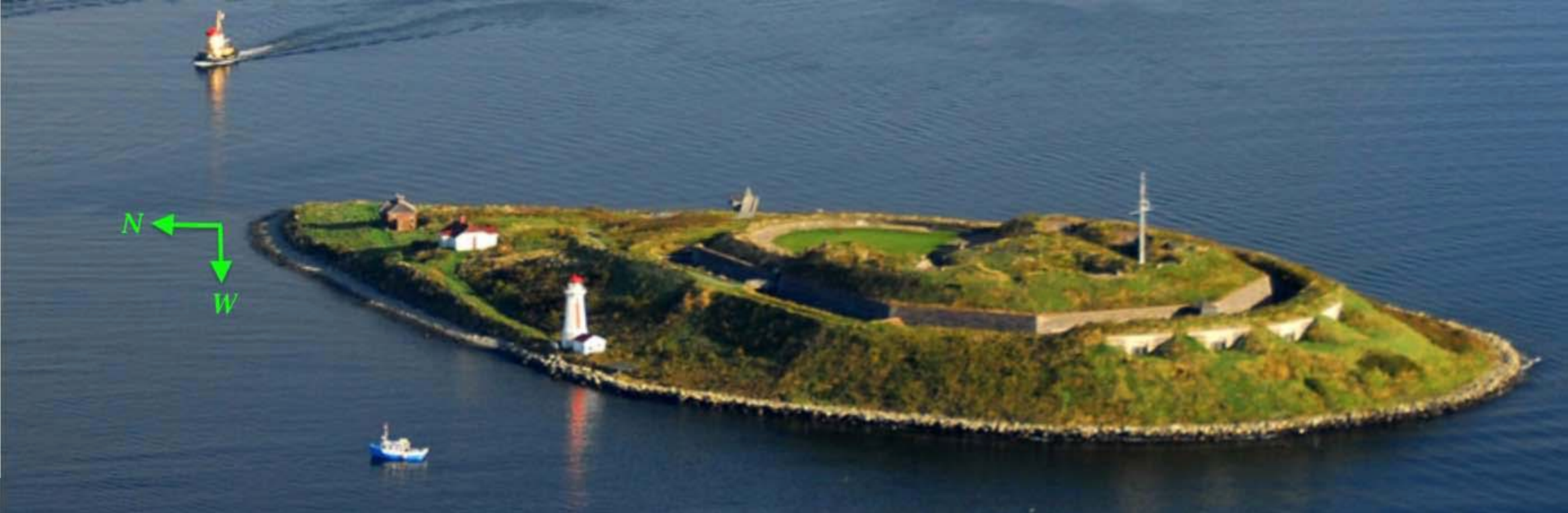
A glacial drumlin, Georges Island is relatively small, but is the largest island in Halifax Harbor. Primarily known for its military significance as part of the Halifax Defence Complex, Georges Island also has served as a lighthouse and a prison for criminals, military captives and Acadians. In 1749 the British began construction of Fort Charlotte on Georges Island and much of it exists today. Construction was done by recent European arrivals to Halifax. Originally called Île à la Raquette (Snowshoe Island) and later Ile d'Enville, in 1749 it became George Island and 1963 Georges Island.
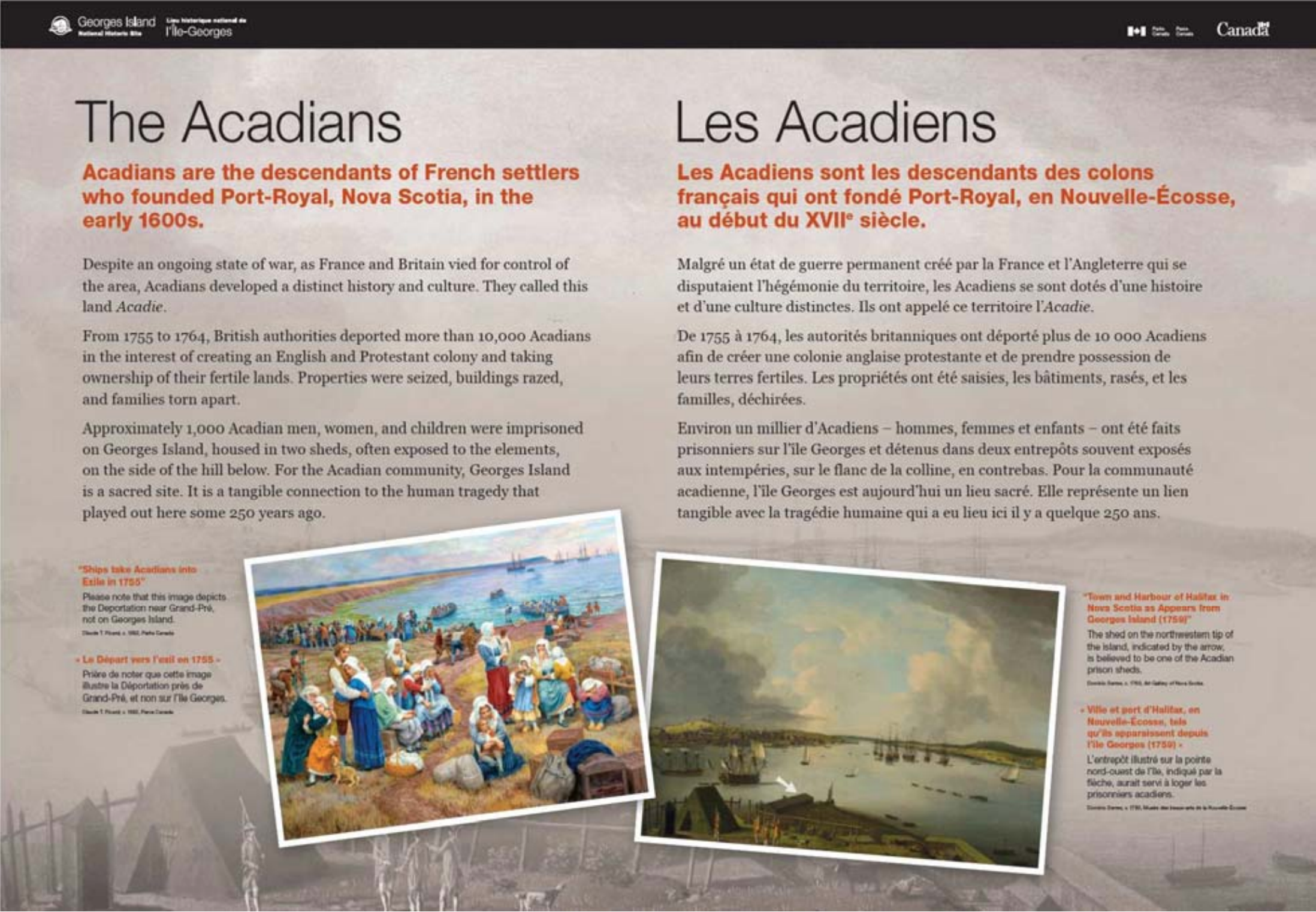
During the Seven Years War (1755-1763) the British used Georges Island to imprison common criminals of Halifax, French sailors and passengers captured on the open seas and Acadians. The British confined as many as 1660 Acadians at Georges Island from 1755 to 1764 with up to 600 there at one time. From here many Acadians were exiled to British colonies on the Atlantic seaboard. The first Acadians imprisoned on Georges Island were fifteen Acadian deputies on 4 July 1755 for refusing to swear an unconditional Oath of Allegiance before the Council of the Governor of Nova Scotia. Later, on 28 July 1755 additional Acadian deputies from Port-Royal, Minas and Pisiquid joined their Acadian brethren on Georges Island for the same reason. All deputies were released on 11 September 1755 and were escorted to their respective communities. 1 2
On 22 September 1755 the British in a surprise raid captured fifty Acadians at Mirliguèche near Lunenburg, loaded them onto the tender Jolly Bachus and delivered them to Georges Island. Earlier, in July and October 1754 British authorities in Halifax had granted these same Acadians permission to settle at Mirliguéche and even had victualed them there. Almost all of these Acadians were of the Guédry family or closely associated with it. 3
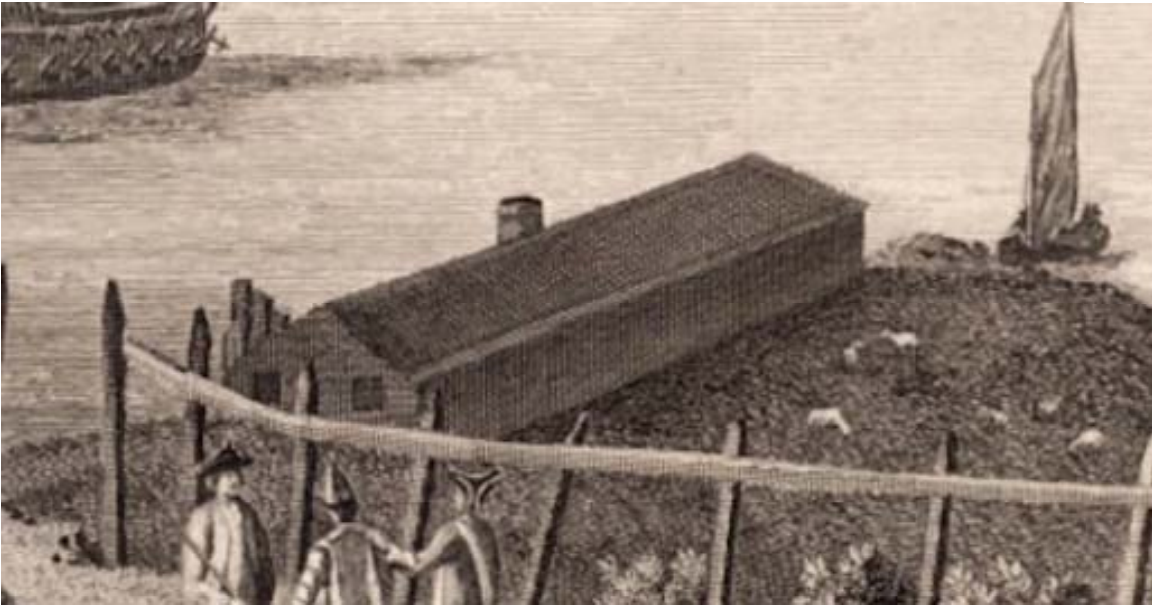
Among the first structures built on Georges Island in 1749 were two large, wooden storage sheds 100-foot long by 25-foot wide. One was located at the northwest end of the island (near today's dock) and the other about 500 feet south on the western shore (near today's lighthouse). Over the ensuing five years, due to the harsh sea environment and possibly lack of upkeep, they had fallen into disrepair. These were the only shelters available to the Mirliguèche Acadians and they had to be shared with any common criminals also there. With little food, only the clothing they were wearing when captured and inadequate shelter, these 50 Acadians had to sustain themselves through two months of harsh winter conditions until they were deported to North Carolina on the sloop Providence under Samuel Brown, Master. They were loaded onto the Providence in mid-November 1755 and set sail on 15 November 1755 - arriving at Edenton, North Carolina in early January 1756. 3 These were the first Acadians to be deported from Georges Island.
During the ensuing seven years over 1600 other Acadians followed this pioneering group of Acadians imprisoned on this small island in the middle of Halifax Harbor.
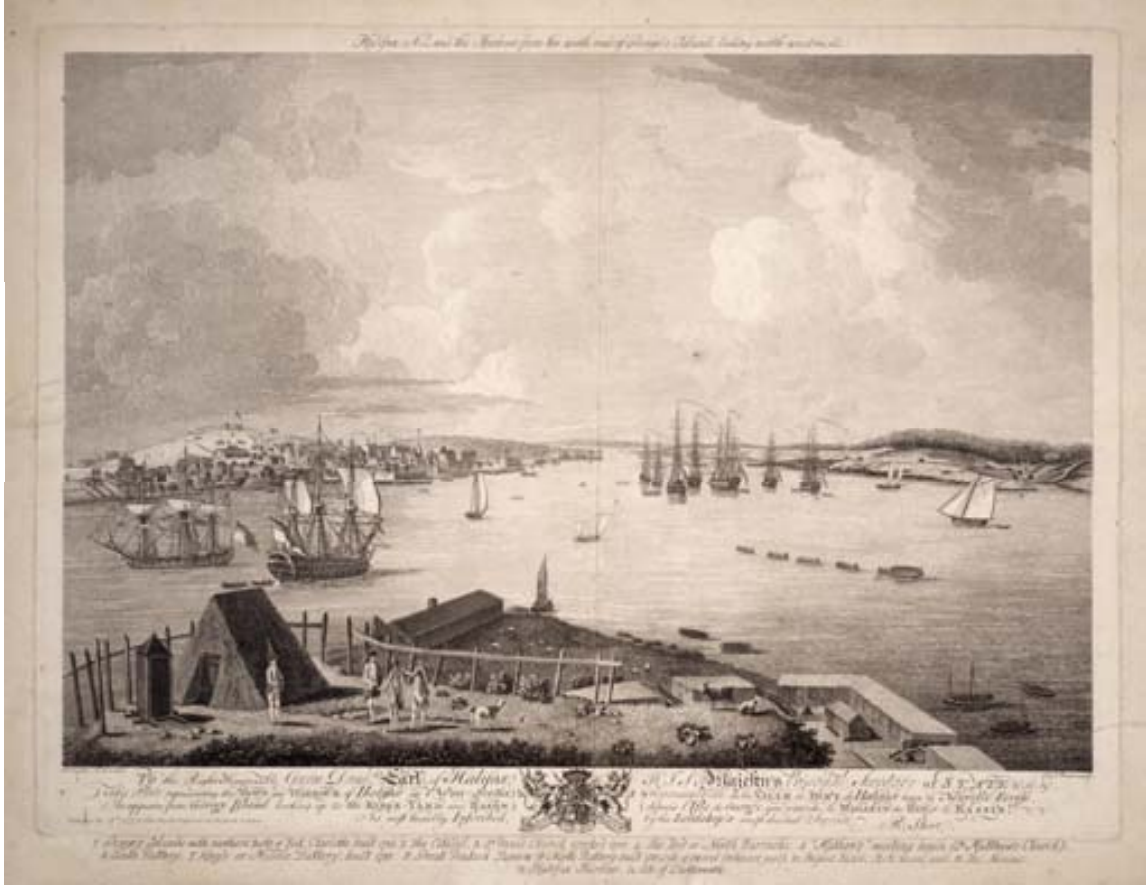
In May, 1759 Richard Short (1744-1777) sketched Halifax Harbor and the northwestern edge of Georges Island. Short was an amateur artist and was the purser on board the HMS Prince of Organge . Significant in this sketch is one of the two wooden sheds which served as shelter to the Acadians. From this sketch Dominic Serres "The Elder" (1722-1793) painted an oil painting that was engraved by James Mason (1710-1785). This oil painting currently is displayed at the Art Gallery of Nova Scotia in Halifax. The wooden shelter is at the northwestern edge of the island - just below the triangular tent structure and near the small sailboat close to the shore. Nothing remains of these two wooden sheds today.
Parks Canada, Develop Nova Scotia and Tourism Nova Scotia have worked together to construct a new wharf at Georges Island and improve the grounds for tourism including installing an Acadian plaque. In August 2020 Georges Island, one of five National Historic Sites in Halifax, welcomed tourists for the first time in several generations. Parks Canada has contracted with Ambassatours Gray Line tour boats to transport visitors to Georges Island. The boats leave about every half-hour from 11:20 am until 4:00 pm with the final departure from Georges Island at 5:00 pm. In 2020 tours are only on Saturdays and Sundays; however, beginning in 2021 Parks Canada expects to have an expanded schedule during the spring, summer and fall. Costs are approximately $25 CAN for adults and $14 CAN for children.
If there is interest, perhaps the Guédry and Petitpas families may arrange to take a group tour of Georges Island a couple of days after our 2024 Reunion in the Clare region.
References
- LeBlanc, Ronnie-Gilles; "Les Acadiens à Halifax et dans l'Île Georges, 1755-1764" ( Port Acadie: revue interdisciplinaire en études acadiennes / Port Acadie: An Interdisciplinary Review in Acadian Studies ; No. 22-23; automne 2012 - printemps 2013 / fall 2012 - spring 2013; pages 43-76. Available on Internet in English at: http://sites.rootsweb.com/~nsgrdpre/ documents/dossiers/Ronnie-Gilles/Acadians-Halifax-Georges-Island-1755-1764-(English).pdf Appendix to above article entitled "List of Acadian Families & Individuals at Halifax between 1759 & 1764" available on the Internet at: http://sites.rootsweb.com/~nsgrdpre/documents/dossiers/Ronnie-Gilles/Halifax-Families-1759-1764-rev- Sept-2013-(English).pdf
- Marshall, Dianne; Georges Island - The Keep of Halifax Harbor (Nimbus Publishing; Halifax, Nova Scotia; 2003) pages 26-29, 79-81, 91-107
- Guidry, Marty; "New Research Reveals Guédry's Exiled to North Carolina" ( Generations ; Les Guédry et Petitpas d'Asteur Family Association; Volume 7, No. 1; Winter 2009) pages 12-39. Available on Internet at: Winter 2009 Newsletter