The Acadians of Canada and the Cajuns of Louisiana - A Journey of Reunification
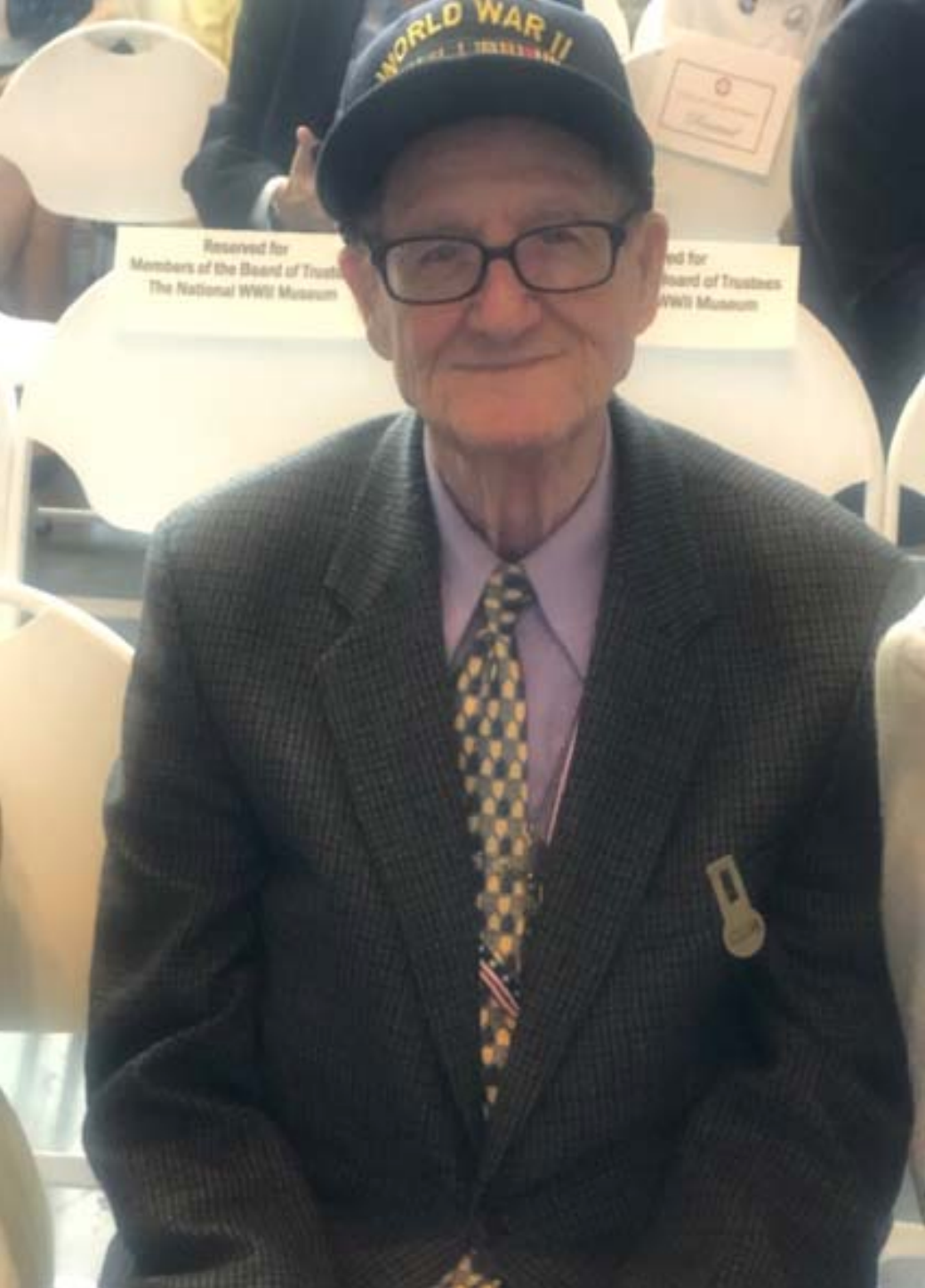
On 27 April 2022 the National World War II Museum in New Orleans, LA hosted a special program on “Cajun-Acadian WWII Commemoration: A Salute to French-Speaking Veterans”. This ceremony honored both Cajun WWII veterans from Louisiana and Texas and Acadian WWII veterans from Canada. The stories of four veterans were highlighted during the day including that of Shirley Guidry of Lake Arthur, LA, who attended the program.
Dignitaries speaking at the program included the Consul General of Canada, the Lieutenant Governor of Louisiana, the President & CEO of the World War II Museum, Acadian military historian Jason Theriot and Acadian historian Warren Perrin.
Warren Perrin's talk on Acadian history and the deportation was succinct, inspiring and highlighted issues many of us never consider. Warren also prepared a very interesting paper discussing the slow reunification of the Cajuns of Louisiana and the Acadians of Canada . His paper follows this brief synopsis of his remarks at the conference. For those that wish to watch the Commemoration Ceremony in its entirely, see the video below.

In 1604 Frenchmen left their homeland to resettle in Acadie. In that same year Puritans (later called Pilgrims) were expelled from England. In 1620 these Pilgrims from England were kicked out of Holland and migrated to Plymouth, MA near Boston. Over the next 150 years a struggle ensued between the French Acadians and the British Pilgrims for control of North America.
The deportation of the Acadians began in late 1755 and was carried out by the grandchildren and great-grandchildren of the Puritan Pilgrims. Their goal was to rid North America of French people. This was the first ethnic cleansing in North America of Europeans. The Acadians were deported initially to the British colonies along the eastern seaboard of North America.
Interestingly, the Acadians were deported because they spoke French. Yet during World War II, the Cajuns and Acadians helped win the War because they spoke French.
Pascal Poirier, a New Brunswick politician in the late 1800s and early 1900s coined the phrase “A Century of Silence” to describe the hundred years after the deportations when no one spoke, wrote or sang about the Acadian diaspora. One third of the Acadians died during the deportations - roughly the same percentage as the Jews that died during the World War II holocaust.
In 1848 Henry Wadsworth Longfellow wrote the epic poem Evangeline and the world became curious - what was the Acadian deportation all about.
This led to the first attempts to reunite the Acadians of the Maritime provinces and the Cajuns of Louisiana - people who had been victimized during the diaspora and sent to more than 40 countries. The Acadians and Cajuns, although cousins and one people, had different experiences during and after the deportation. Their goals were different and reunification would be a difficult and arduous journey - a journey just seeing fruition during our lifetimes.
The paper below lays the groundwork for the unification and describes the details of the process.
Seeking An Acadian Nation