Early Acadian Religious Leaders
The Acadians were a strong Catholic community and remain so today in many towns and villages. Prior to the Acadian Deportations in 1755-1763, the Catholic religious leaders of the Acadians were primarily French priests and bishops although a few priests came from other countries. Shortly after the deportation period, several Acadian men and women became Catholic priests and nuns to serve their fellow Acadians. Who were the first Acadians to carry the Catholic faith to their people?
JOSEPH-MATHURIN BOURG - FIRST ACADIAN PRIEST
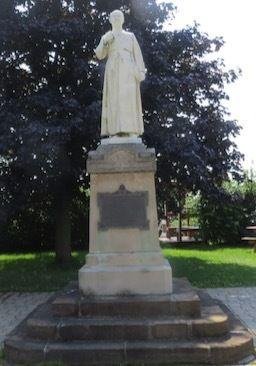
On 19 September 1772 Joseph-Mathurin Bourg became the first Acadian to be ordained a Catholic priest. Born on 9 June 1744 at Rivière-aux-Canards to Michel Bourg and Anne Hébert, Joseph-Mathurin Bourg was captured by the British in 1755 and deported to Virginia and then sent by the Virginia authorities to England. In 1763 he was released by the British and went to Saint-Suliac, France and in 1766 moved to Saint-Servan, France. In 1767 he began his studies at the Séminaire du Saint-Esprit in Paris under the patronage of Abbé de L’Isle-Dieu, the bishop of Québec’s vicar-general in France. He received his minor orders on 9 June 1770 at 26 years of age. In 1772 Joseph-Mathurin Bourg was sent to Québec and on 19 September of that year was ordained a priest by Bishop Jean-Olivier Brian in the Chapel of the Hôtel-Dieu at Montréal. He was a Spiritan missionary in the Congregation of the Holy Spirit (CSSp).
In 1773 Père Bourg was sent to serve the Acadian population scattered in Nova Scotia which also included New Brunswick and Gaspé - recording his first act in the parish registers of Bonaventure on 3 September 1773. He then ministered to the Acadians throughout the Baie des Chaleur region and even to Memramcook, New Brunswick and Minudie, Nova Scotia. In 1774 he returned briefly to Québec where he was appointed vicar general in Acadia, but by the Fall of 1774 he was ministering to the Acadians on the Saint John River and southwestern Nova Scotia. In the late 1770s and 1780s he ministered to and calmed the First Nations people in Nova Scotia and New Brunswick. From 1780 to 1783 he made annual pilgrimages to southwestern Nova Scotia. From August 1785 until February 1786, he served the Acadians of Halifax and then returned to the Baie des Chaleurs area where he lived at Tracadièche on the Gaspé peninsula. After contracting a severe fever in the winter of 1794-1795, he asked to be recalled to the Québec area and was made pastor of the parish of Saint-Laurent near Montréal where he remained until his death on 20 August 1797 at age 53. He is buried in the Cimetière SaintLaurent in Saint-Laurent, Québec, Canada.
JEAN-BAPTISTE BRO - SECOND ACADIAN PRIEST
Less than two months after the ordination of Joseph-Mathurin Bourg, his step-brother JeanBaptiste Bro became the second Acadian to be ordained a Catholic priest. Born to Séraphin Breaux and Brigitte Martin on 20 April 1743 at Rivière-aux-Canards, Jean-Baptiste Bro was deported in 1755 to Virginia and then sent by the Virginian authorities to England in 1756. In 1763 he went to Saint-Malo, France and then settled in Saint-Suliac, France. After 1766 he moved to Saint-Servan, France. He studied at the Séminaire de Saint-Malo and then at the Séminaire du Saint-Esprit in Paris where he received minor orders on 9 June 1770. He was ordained to the priesthood on 15 November 1772 by Bishop Louis-Philippe Mariauchau d’Esgly at the Séminaire de Québec. Like Père Joseph-Mathurin Bourg, Père Jean-Baptiste Bro desired to serve his fellow Acadians. In October 1773 he was assigned to serve the Acadians that had come from New England to L’Assomption, Québec, Canada. On 8 November 1774 Père Bro became the parish priest of Saint-Jacques-de-l’Achigan north of Montréal. He remained there as the parish priest until his retirement in October 1814. Jean-Baptiste Bro died on 12 January 1824 in his beloved Saint-Jacques-de-l’Achigan. He was held in high esteem by his parishioners.
ÉDOUARD-ALFRED LEBLANC - FIRST ACADIAN BISHOP
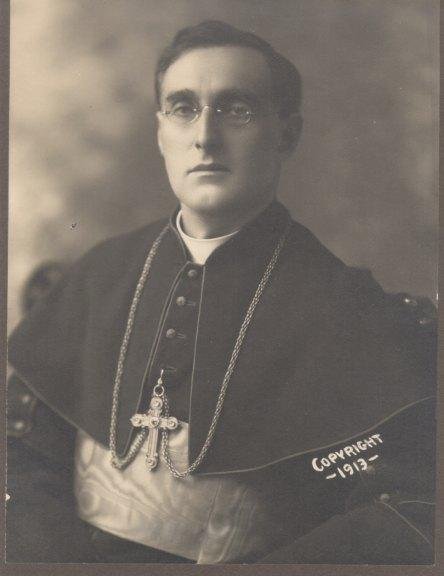
Born on 15 October 1870 in Saint-Bernard Catholic parish in Clare, Nova Scotia to Luke LeBlanc and Julia Beliveau, Édouard-Alfred LeBlanc was the youngest of five children; his father was a farmer and lumberman. In 1889 he began his classical studies at the Collège Saint-Joseph in Memramcook, New Brunswick with the Holy Cross Fathers. After two years he moved to the Collège Sainte-Anne in Church Point, Nova Scotia under the direction of the Eudists - being among the very first students to enroll at Collège Sainte-Anne. His collegiate work was excellent and after graduating in 1895, he entered the Eudist seminary in Halifax - Holy Heart Seminary. He was ordained a priest on 29 June 1898 in Saint Mary’s Cathedral by Archbishop Cornelius O’Brien. For the next 14 years he ministered to the Acadians in the Archdiocese of Halifax at Stella Maris Parish in Meteghan (1898-1901), Saint-Jérôme Parish in West Caledonia (1901- 1906), Saint-Vincent de Paul Parish in Salmon River (1906-1907) and then returned to his home parish of Saint-Bernard in Saint-Bernard (1907-1912) where he was instrumental in the initial stages of construction of the large granite church (1910-1942).
For at least two decades Acadian nationalists had been pushing religious authorities to appoint an Acadian into the upper levels of the Roman Catholic Church administration. Their voices were finally heard and on 10 December 1912 Édouard-Alfred LeBlanc became the Bishop of the Diocese of Saint-John, New Brunswick - becoming the first Acadian bishop. His episcopate from the start was fraught with difficulties as Acadian nationalists continued to push for more Acadian religious leadership in the Maritime Catholic Church. Bishop LeBlanc was crucial in the appointment of Patrice-Alexandre Chiasson as the bishop of the Diocese of Chatham - the second Acadian bishop. These two giants then pressed for an Acadian Archdiocese of Moncton headed by an Acadian. Unfortunately, Bishop Édouard-Alfred LeBlanc died on 17 February 1935 at Saint-John, New Brunswick without learning of the outcome of his struggles to establish the Archdiocese of Moncton, New Brunswick. In 1936 the Archdiocese of Moncton was created and an Acadian Louis-Joseph-Arthur Melanson was appointed the first Archbishop of the Archdiocese of Moncton.
PATRICE-ALEXANDRE CHIASSON - SECOND ACADIAN BISHOP
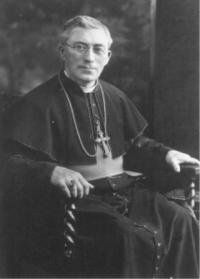
Born 26 November 1867 to Oliva Chiasson and Angèle Haché at Grand-Étang, Cape-Breton, Nova Scotia, Patrice-Alexandre Chiasson was only five years old when his parents moved to Rogersville, New Brunswick. Early in Patrice-Alexandre’s life, the Acadian activist Père MarcelFrançois Richard noticed something special about this young man and encouraged him to study at Collège Sainte-Anne in Church Point, Nova Scotia. He spent three years at Collège SainteAnne during which he joined the Congregation of Eudists (also called the Congregation of Jesus and Mary - CJM or CIM). In September 1894 he entered the novitiate in Brittany, France and was ordained to the priesthood at Rennes, Brittany, France on 8 June 1898. Returning to Canada, he dedicated himself to the education of young men at the Collège Sainte-Anne from 1898 to 1917. In 1908 he became Superior of Collège Sainte-Anne.
On 27 July 1917 Pope Benedict XV appointed Père Chiasson as Apostolic Vicariate of the Golfe Saint-Laurent, Québec, Canada and on 18 October 1917 he was ordained Bishop of Lydia at Church Point, Nova Scotia becoming the second Acadian bishop. On 9 September 1920 he was appointed Bishop of Chatham, New Brunswick and was installed as the Bishop of Chatham on 16 December 1920. When the Diocese of Chatham was renamed the Diocese of Bathurst on 13 March 1938, Bishop Chiasson became the first Bishop of Bathurst. Bishop Chiasson was a strong support of Catholic education and Catholic religious organizations. Bishop PatriceAlexandre Chiasson died on 31 January 1942 at the age of 74 at the Hôtel-Dieu in Campbellton, New Brunswick.
LOUIS-JOSEPH-ARTHUR MELANSON - FIRST ACADIAN ARCHBISHOP
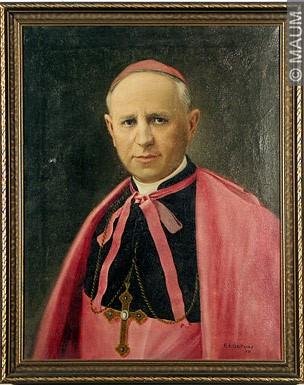
After Bishops LeBlanc and Chiasson were installed, they petitioned for the creation of a Diocese in Moncton because of the constant growth of the Catholic population compared to the Protestants in the Diocese of Saint John. They further argued the prestige of the Catholics in government circles would increase if an Archdiocese of Moncton were created. On 18 March 1936 the Archdiocese of Moncton was created. On 16 December 1936 Bishop Arthur Melanson was appointed as the archbishop of the new Archdiocese. His installation as the Archbishop of the Archdiocese of Moncton occurred on 22 February 1937 in the basement of the Notre-Damede-l’Assumption Catholic Church. Archbishop Louis-Joseph-Arthur Melanson was the first Acadian archbishop.
Born at Trois-Rivières Québec on 25 March 1879 to Raphael Melanson, a laborer, and Philomène Royer, Louis-Joseph-Arthur Melanson was Acadian on his paternal side. At age 15 around 1894 Arthur Melanson entered the seminary in Rimouski, Québec and soon stood out as a person with solid virtues. He was amicable, obedient, hard-working, polite, preserving in his work and very loyal to rules. Desiring the priesthood, Arthur Melanson entered the Grand Seminary in Montréal on 20 September 1900. He finished his theological studies on 27 June 1905. He was ordained on 9 July 1905 by Bishop Thomas Francis Barry to serve in the Diocese of Chatham. He served in Balmoral and Campbellton. On 22 February 1933 he was consecrated Bishop of Gravelbourg, Saskatchewan and became the first Archbishop of the Archdiocese of Moncton on 16 December 1936. During his tenure as archbishop, he created an agricultural school and a social sciences school and was involved in the organization of the ‘Causes Populaires” (similar to a member-owned credit union) and cooperatives served by the Archdiocese of Moncton. Archbishop Arthur Melanson died at age 62 on 23 October 1941 at the Hôtel-Dieu hospital in Campbellton after a lengthy illness.
NORBERT ROBICHAUD - SECOND ACADIAN ARCHBISHOP
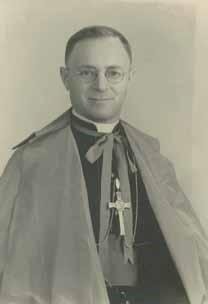
With the death of Archbishop Melanson in 1941, the Vatican appointed Vicar-General of the Diocese of Bathurst Norbert Robichaud as Archbishop of the Archdiocese of Moncton on 25 July 1942. The son of Marcel Robichaud and Nathalie Gallant, Norbert Robichaud was born on 1 April 1905 in Saint-Charles-de-Kent, New Brunswick. He studied at Collège Sainte-Anne Collége in Church Point, Nova Scotia and at the Sacred Heart of Mary Seminary in Halifax, Nova Scotia. On 1 May 1931 he was ordained to the priesthood as a priest of the Diocese of Chatham. He served as the bishop’s secretary and then director of cloistered retreats in Chatham. He then obtained a Doctorate in Theology at the Angleicum College in Rome, Italy in 1938. Returning to Canada, he became the Chancellor and Vicar General for the Diocese of Bathurst.
Père Norobert Robichaud was appointed the Archbishop of the Archdiocese of Moncton on 25 July 1942 and ordained as such on 8 September 1942 at the Notre-Dame-de-l’Assomption Cathedral in Moncton. At the time he was the youngest bishop in Canada. Archbishop Robichaud received several honorary doctorates and became the first chancellor of the University of Moncton. During his episcopate 13 new parishes were created, 50 priests were ordained and two bishops ordained. He also founded or organized several Catholic institutions and organizations. After developing significant health concerns, Archbishop Robichaud had to resign the episcopate on 23 March 1972. On 21 October 1979 he died as Archbishop Emeritus of Moncton at the Dumont Hospital in Moncton, New Brunswick.
ROBERT FRANCIS PREVOST / POPE LEO XIV - FIRST ACADIAN CARDINAL AND FIRST ACADIAN POPE
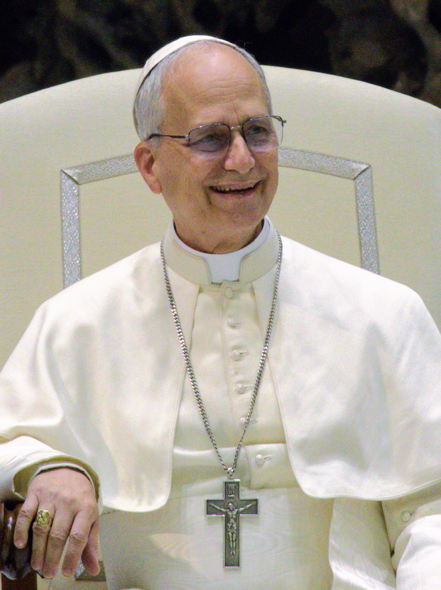
Born 14 September 1955 in Chicago, Illinois to Louis Prevost and Mildred Agnes Martinez, Robert Francis Prevost had an extremely diverse heritage including Italian, Spanish, French, French Canadian, Cuban, Haitian, Guadeloupean and Acadian. His Acadian roots derive from his maternal ancestry and include:
- Pierre Thibodeau and Jeanne Theriot
- Antoine Bourg and Antoinette Landry
- François Savoie and Catherine Lejeune
- Vincent Breau and Marie Bourg
- Jean Theriot and Perrine Rau
- Martin Aucoin and Marie Gaudet
- Denis Gaudet and Martine Gauthier
His 4th great-grandmother Marie Savoie was an Acadian who arrived in Louisiana by July 1767. She was the daughter of Jean Savoie and Ursule Thibodeaux and married Francois Jacquet, a soldier in the Louisiana Regiment. Marie Savoie was a native of Chipoudy, Acadia.
On 1 September 1977 Robert Francis Prevost became a member of the Order of Saint-Augustine (O.S.A.). On 19 June 1982 he was ordained a priest of the Order of Saint-Augustine at Santa Monica College. On 14 September 2001 he was appointed Superior General of the Order of Saint-Augustine. He was ordained a Bishop on 12 December 2014 as the Titular Bishop of Sufar at Santa Maria Cathedral in Chiclayo and on 26 September 2015 appointed the Bishop of Chiclayo, Peru. On 30 September 2023 Bishop Prevost was appointed Cardinal-Deacon of Santa Monica and installed as same on 28 January 2024. On 6 February 2025 he was appointed the Cardinal-Bishop of Albano. He was elected Pope on 8 May 2025 and installed as Pope of the Roman Catholic Church on 18 May 2025.
MARCEL-FRANÇOIS RICHARD, PRIEST AND CHAMPION OF ACADIAN RIGHTS
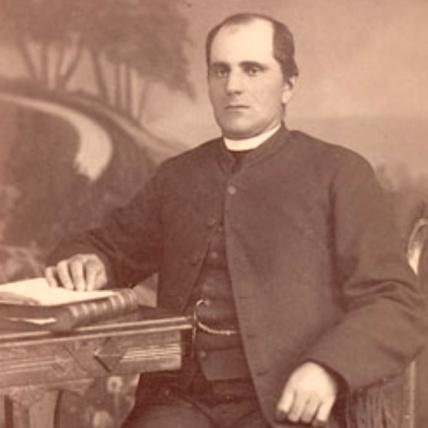
Born on 9 April 1847 at Saint-Louis-de-Kent, New Brunswick to Pierre-Luc Richard and MarieTharsile Bariault, Marcel-François Richard entered Saint-Dunstan’s College in 1861 at Charlottetown, Prince Edward Island. In 1864 he transferred to the Collège Saint-Joseph at Memramcook, New Brunswick from which he graduated in 1867. He then began his study of theology at Grand Séminaire de Montréal. On 31 July 1870 he was ordained a priest in Charlottetown. He was assigned as the curate of his home parish Saint-Louis-de-Kent, New Brunswick in August 1870. There he took a strong interest in education and worked to that end. The Bishop of Chatham transferred him to the mission at Rogersville, New Brunswick in 1885.
Pére Richard’s was instrumental in developing pride and Acadian nationalism in the Acadian people of the Maritimes. He worked to develop national strategies to ensure Acadian survival. At the first Acadian National Convention at Memramcook, New Brunswick in 1881, he argued extensively on the date of the Acadian national holiday. Many wanted to adopt the Feast of Saint-Jean Baptist (24 June) that the French Canadians celebrated; however, Père Richard and his supporters successfully argued for the Assumption of Mary (15 August). In 1884 at the second Acadian National Convention at Miscouche, Prince Edward Island he introduced a flag he had made - the French tricolor with a yellow star in the blue segment to represent the Acadian devotion to Mary. He proposed this flag to be the Acadian National Flag and it was adopted as such. Also, in 1884 he was responsible for the choice of “Ave Maris Stella” as the Acadian National Anthem. He played a major role in promoting the Acadian cause by participating in nationalist speeches and debates and worked hard to promote Acadian newspapers, agricultural colonization, education and the appointment of Acadians as bishops in the Maritime provinces. He was a key voice in the creation of the Archdiocese of Moncton and that an Acadian would be the archbishop. Père Marcel-François Richard truly was a champion of Acadian rights in the Maritime provinces devoted to the cause of Acadian survival. He is recognized as the greatest Acadian nationalist of the 19th century. Père Richard died 18 June 1915 in Rogersville, New Brunswick.
ALODIE-VIRGINIE [ÉLODIE] PARADIS (MOTHER MARIE-LÉONIE PARADIS) - FIRST ACADIAN SAINT
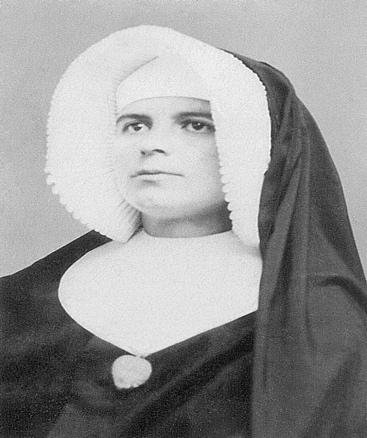
Born Alodie-Virginie Paradis on 12 May 1840 at L’Acadie, Québec to Joseph Paradis and Emilie Gregoire, she was called Elodie during childhood. Elodie was educated by the Sisters of NotreDame. At the age of 14 on 21 February 1854, despite her frail health, she became a candidate for the congregation of the Marianites of Saint-Laurent in Montréal. Elodie pronounced her vows on 22 August 1857 and received the religious name Marie de Sainte-Léonie (which became shortened to Marie-Léonie). For several years Sister Marie-Léonie taught in Montréal and in 1862 was sent to Saint-Vincent de Paul parish of French-speaking Catholics in Manhattan, New York. In 1870 she joined the Sisters of Holy Cross in Notre-Dame, Indiana where she taught French and needlework to the Sisters training to be teachers. In 1874 she was appointed the novice mistress at the Collège Saint-Joseph in Memramcook, New Brunswick where she supported the housekeeping and culinary departments and helped in educating young Acadian girls.
On 31 May 1880 Sister Marie-Léonie established the Little Sisters of the Holy Family congregation of Acadian girls initially dedicated to human and spiritual welfare of poor illiterate girls and to service the diocesan colleges. Bishop John Sweeny of New Brunswick, however, would not grant the small group approval. Persistent she was, and in 1895 Bishop Paul LaRocque of Sherbrooke, Québec needed domestic staff for his seminar and he received the motherhouse and novitiate of the Little Sisters into his diocese. The Little Sisters community moved to Québec and Bishop LaRocque granted them canonical approval on 26 January 1896. In 1905 Pope Pius X relieved Sister Marie-Léonie of her obligations to the Holy Cross Congregation. Within a few years she became seriously ill with a malignant cancer and her health declined. She died on 3 May 1912 after receiving the last sacraments.
Sister Marie-Léonie’s beatification process began on 27 November 1952 and concluded by the end of the year. On 13 June 1966 Pope Paul VI declared her a Servant of God - the first of four steps toward sainthood. On 31 January 1981 Pope John Paul II recognized her life of heroic virtue and proclaimed her to be venerable - the second step toward sainthood. Pope John Paul II approved a miracle attributed to her on 17 February 1984 and beatified Sister Marie-Léonie on 11 September 1984 in Montréal - the third step toward sainthood. A second miracle attributed to her was approved by Pope Francis on 24 January 2024. She was canonized by Pope Francis on 20 October 2024 and officially became a Saint. She is only the third Canadian Saint born in Canada and the first Acadian Saint.
The paternal great-grandmother of Saint Marie-Léonie was Elisabeth Roy, the daughter of Éloi Roy and Françoise-Rose Breau. Her Breau lineage is:
- Saint Marie-Léonie Paradis
- Joseph Paradis & Émilie Grégoire
- Elisabeth Roy & Jean-Baptiste Paradis
- Françoise-Rose Breau & Éloi Roy (She was a sibling of Firmin Breaux of Breaux Bridge, Louisiana)
- Alexis Breau & Marguerite Barrie
- Antoine Breaux & Marguerite Dugas
- Vincent Breau & Marie Bourg
CHARLENE MARIE RICHARD - POTENTIAL SECOND ACADIAN SAINT
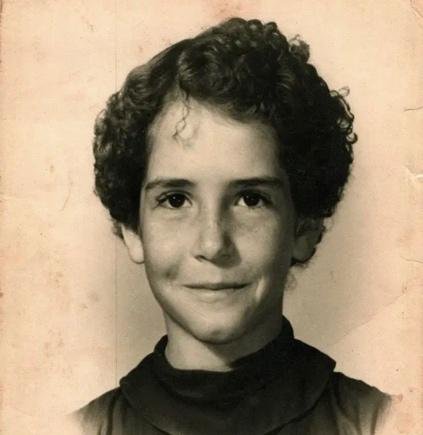
The 2nd of ten children of Joseph Elvin Richard and Alice Matte Bourgeois, Charlene Marie Richard was born at Richard, Acadia Parish, Louisiana on 13 January 1947. At ten years of age Charlene read a book about Saint Thérèse of Lisieux, a young French woman who suffered and died from a debilitating disease and offered her suffering through prayer to God. Although a normal Cajun girl by all standards, Charlene asked her grandmother if she could become a saint by praying like Thérèse. One afternoon Charlene told her mother that she had just seen a tall woman in black who seemed to speak to her and then she drifted away. Shortly afterwards, Charlene’s sixth-grade teacher told her parents that Charlene was not herself. They took her to the medical doctor and she was diagnosed with acute lymphatic leukemia. She was brought to Our Lady of Lourdes Hospital in Lafayette, Louisiana and two weeks later on 11 August 1959 she died.
Charlene’s demeanor at the hospital caught the attention of Sister Teresita Crowley, Director of Pediatrics, and Father Joseph Brennan, the hospital’s chaplain. They both noted how young Charlene, although in constant pain, offered up her suffering for others and praying for their healing or conversion as she died.
Sister Crowley and Father Brennan told others of Charlene’s spirituality beyond her years. Father Brennan discussed Charlene with his friend Father Floyd Calais, who never met Charlene. Having heard from Father Brennan of people whom Charlene had prayed and noted that they had been healed or converted to Catholicism, Father Calais in 1961 began praying to Charlene for a new parish and in the same year was assigned to St. Edward Catholic Church in Richard, Louisiana - the home parish of Charlene Richard.
Word quickly spread of Charlene and devotions to her began as well as visits to her grave and praying. Soon the sphere of the Little Cajun Saint spread well beyond Louisiana. Testimonials of people she had helped began circulating. People both locally and nationally began suggesting her canonization as a Saint.
In January 2020 Bishop Douglas Deshotel of the Diocese of Lafayette officially opened the cause of Charlene Richard’s sainthood at a Mass in Lafayette. After the Mass Charlene Richard was named a Servant of God - the first step of four to sainthood.
Although her journey to sainthood has only completed the first step, Servant of God, many people from South Louisiana and the nation firmly believe that Charlene Marie Richard is a saint and refer to her as the Little Cajun Saint.
ROSE LEBLANC (SISTER SAINTE-MONIQUE) - FIRST ACADIAN NUN*
Rose LeBlanc was the daughter of René LeBlanc and Anne Theriot and the widow of Raphael Broussard. A native of Grand-Pré, Acadia and born 29 December 1734, Rose LeBlanc lost her husband and her two children during Le Grand Dérangement after 12 August 1763. When she arrived in New Orleans alone possibly in May 1765, she stayed in New Orleans at the Ursuline Convent. On 14 August 1765 she was admitted as a novitiate to the Order of Saint Ursula because of her good will, gentle disposition and kindness to all. She was received as a coadjutrix Sister on 31 March 1766 and received her religious habit on 29 April 1766. Given the name Sister Sainte-Monique, Rose LeBlanc made her vows in the presence of Father Dagobert on 30 April 1768. Sister Sainte-Monique (Rose LeBlanc) died on 6 February 1773. The Ursulines considered her a very useful member of their community, skillful in all things, had a gay disposition, fervent in all her duties and rendering prompt service to all alike. She died of smallpox.
ANNE-GERTRUDE BRAUD (SISTER MARIE-JOSEPH) - SECOND ACADIAN NUN
The daughter of Charles Braud and Claire Trahan and native of Pisiguit, Acadia, Anne-Gertrude Braud was born about 1744. About 1767 Anne-Gertrude Braud arrived in New Orleans and asked to be received in the Ursiline Convent as a novitiate. On 24 March 1768 the community consented to let her test her vocation as a coadjutrix Sister. On 30 April 1768 Anne-Gertrude Braud received the religious habit and was given the name Sister Marie-Joseph. She made her religious profession on 30 April 1772. Sister Marie-Joseph (Anne-Gertrude Braud) died in 1818. Sister Marie-Joseph served the community in every way she could and had great charity being of service to all.
[At least two other Acadian women entered the Ursuline Convent in the late 1760s; however, neither took her final vows.
ELIZABETH BRO (BRAUD)
Elizabeth Bro, the sister of Anne-Gertrude Braud, asked to be received as a novitiate of the Ursilines on 6 August 1768. She was accepted. Her health declined rather rapidly and she died on 12 May 1771 after having received the last sacraments.
MARGUERITE BOURG (SISTER SAINTE-CLAIRE)
Marguerite Bourg, born at Grand-Pré, Acadia ca. 1748 and daughter of Joseph Bourg and Marie Landry, entered the Ursuline Convent in 1767 at 19 years of age after both of her parents died. She was initially received as a coadjutrix Sister because she had spent more than a year at the Ursuline boarding school in New Orleans. On 26 October 1767 she received her religious habit and was given the name Sister Sainte-Claire. In April 1768 the community determined that she did not have the qualities required for the religious life and she returned to her family - never having made her final vows.
ANTOINETTE DE LA TOUR - VERY EARLY ACADIAN NUN IN FRANCE
Antoinette de la Tour, the second daughter of Charles de Saint-Étienne de la Tour and an unknown Mi’kmaq woman, was born in 1627 at Cap-de-Sable, Acadia. In 1632 Charles de la Tour brought Antoinette and his other two daughters by the same mother to France. Charles de la Tour placed Antoinette with a Huguenot relative Madame de Saint-Hilaire in La Rochelle, France. Some time later Claude de Razilly wished to move Antoinette de la Tour with his sister Louise, a nun at the Benedictine Abbey at Beaumont-lès-Tours in Tourraine, France. Madame de Saint-Hilaire, being a Huguenot, strongly objected; however, Claude de Razilly prevailed and on 13 June 1634 Antoinette entered the Abbey at Beaumont-lès-Tours in Tourraine.
In 1642 Antoinette de la Tour requested to join the Order and was accepted. When Antoinette took the habit, many dignitaries and people of rank attended - primarily to hear her beautiful voice which was well known throughout the area. On learning of her wonderful voice, the Queen had her brought to Paris so she could hear Antoinette sing. The Queen even wanted to keep her in Paris; however, Antoinette begged to return to the Abbey and after eight months was allowed to do so. In 1646 Antoinette de la Tour pronounced her vows at the Benedictine Abbey at Beaumont-lès-Tours in Tourraine, France and became a Sister.
Despite the splendor in society that her beautiful voice offered, Sister Antoinette chose to live a life of modesty in the cloister of the Benedictine Abbey with the other Benedictine nuns. Here in obscurity, she shut herself up from the rest of the world and was not heard of afterward. The only record known after 1646 of her is when she became the godmother at the baptism of her niece on 14 March 1660 at La Rochelle to whom she gave her name Antoinette. She remained in France the rest of her life - never to return to Acadia.
ROSE LANDRY WHITE (LEBLANC) - FIRST ACADIAN MOTHER SUPERIOR
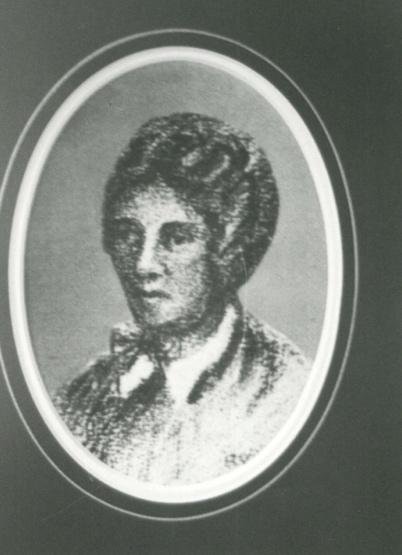
The daughter of George Landry and Magdalaine Jeaudain, Rosetta (Rose) Landry of Acadian descent was born in Baltimore, Maryland on 23 March 1785. At age 14 she married the much older Captain Joseph White (Leblanc). They had two children together and then tragically her husband died at sea in the latter part of 1804. Her young daughter Margaret died on 9 May 1804 - shortly before her father’s death at sea. A young 19-year old widow with a year-old son, Rose turned to family and friends and her strong religious beliefs for needed support. She became very involved in the Catholic Church and Christian charity over the next five years.
In June 1808 Elizabeth Seton, also a widow with two sons and three daughters arrived in Baltimore determined to establish a school. In June 1809 Rose Landry White and five other women joined Elizabeth Seton at her school on Paca Street in Baltimore, Maryland and announced they had formed a religious community. On 21June 1809 Elizabeth Seton with three women went to the small village of Emmitsburg, Maryland to establish their community. Rose Landry and the remaining community members remained on Paca Street until 28 July 1809 when they left for Emmitsburg. On their arrival Elizabeth (now Mother) Seton appointed Rose Landry White as her assistant. Rose was among the first band of Sisters of to form the Sisters of Charity of St. Joseph’s at Emmitsburg on 31 July 1809. In Emmitsburg the Sisters continued their fledging school and were formalizing their new Catholic order. On 19 July 1813 eighteen Sisters including Rose took their first vows.
Mother Seton at this time felt Rose was better suited to the religious life than she was.
In 1814 the Sisters of Charity began their first ministry outside Emmitsburg. They began caring for orphans in Philadelphia, Pennsylvania at St. Joseph’s Orphan Asylum. Rose’s organizing ability and economic management as well as her ability to educate and care for the children rose to the surface in this ministry. She became the order’s first Sister Servant. On 4 January 1821 Mother Seton died and three week later on 25 January the Sisters elected Rose White as her successor. Mother Rose White became the first Acadian Mother Superior.
Under Mother Rose White’s vision, the Sisters of Charity established over a dozen other ministries throughout the eastern part of the United States. And this was just the beginning of her outstanding service. Mother Rose White was elected to multiple 3-year terms to lead the Sisters of Charity of St. Joseph’s. On 25 July 1841 Mother Rose White died at 57 years of age in Frederick, Maryland leaving a legacy of superior caring and work.
GUÉDRY AND PETITPAS RELIGIOUS OF THE PRESENT-DAY
Although no records of Guédry and Petitpas men and women entering the religious life could be found for the 1600s-mid-1800s, there have been many Guédry and Petitpas men and women who have taken Catholic vows during the 1900s. A brief, but by no means exhaustive, listing of these is below. We have omitted a very few names of ordained men who have been identified as morally corrupt and have been removed from active ministry.
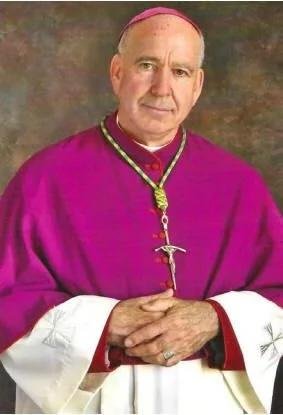
Archbishop Emeritus Gérard Pettipas, C.Ss.R. - Born 6 September 1950 at Halifax, Nova Scotia and having East Chezzetcook, Nova Scotia roots, he was the son of Albert Léo Pettipas and Mary Elizabeth Grady of East Chezzetcook. Gérard Pettipas was ordained a Priest of the Congregation of the Most Holy Redeemer (Redemptorists, C.Ss.R.) on 7 May 1977. He was appointed the Archbishop of Grouard-McLennan, Alberta, Canada by Pope Benedict XVI on 30 November 2006 and was ordained on 25 January 2007. On 6 September 2025 he retired as the Archbishop of the Grouard-McLennon Archdiocese.
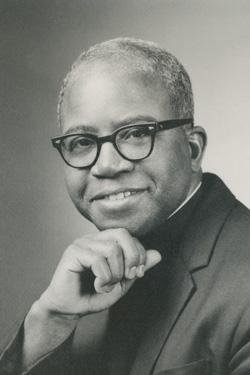
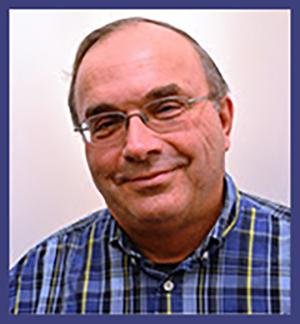
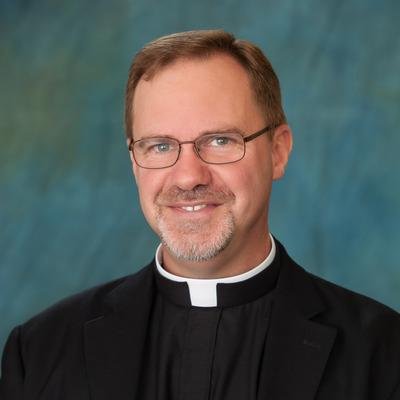
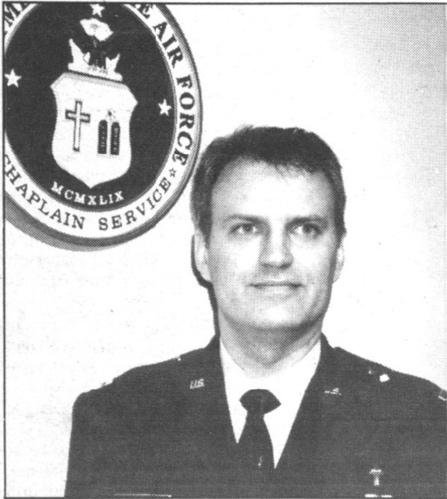
Deacon (Permanent) Dr. Lawrence Joseph Guidry was ordained to the permanent diaconate on 18 September 1976 at. St. Louis Cathedral in New Orleans, Louisiana. Born 29 October 1938 in Rayne, Louisiana, he was the son of Joseph A. Guidry and Odile Cormier and the husband of Carolyn Marie Haney. He died 23 August 1992 in Duson, Louisiana.
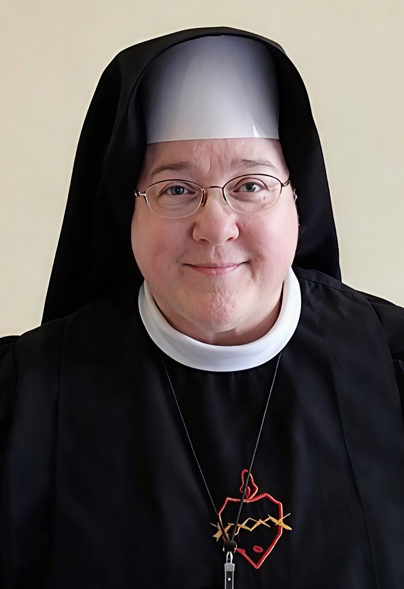
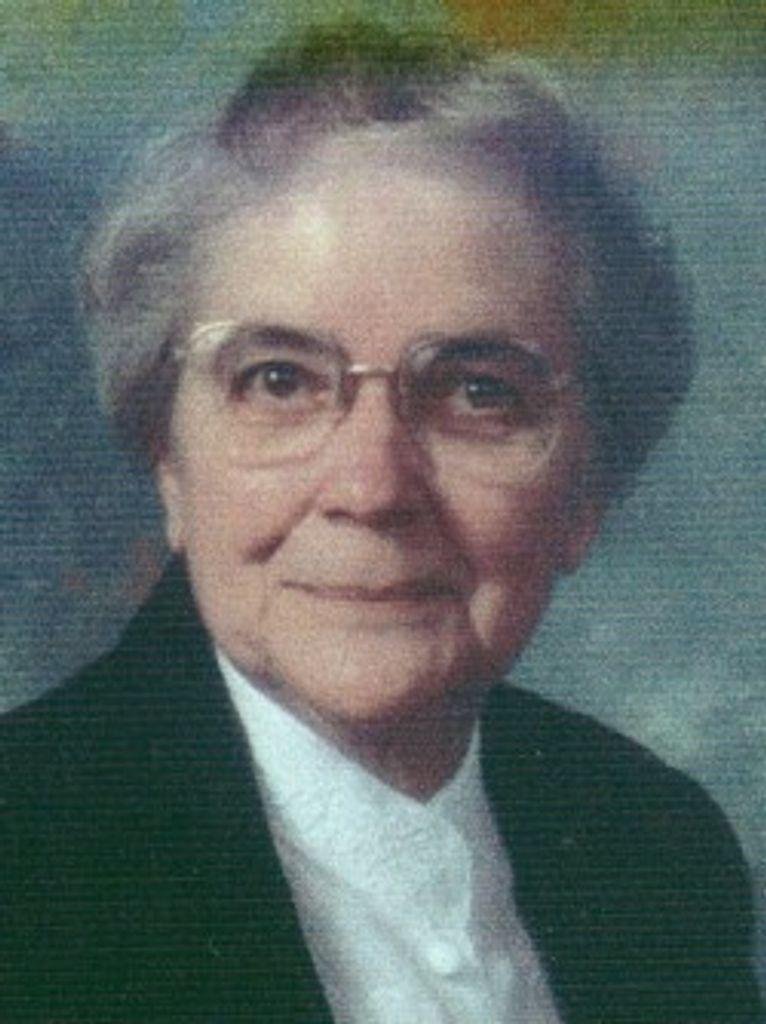
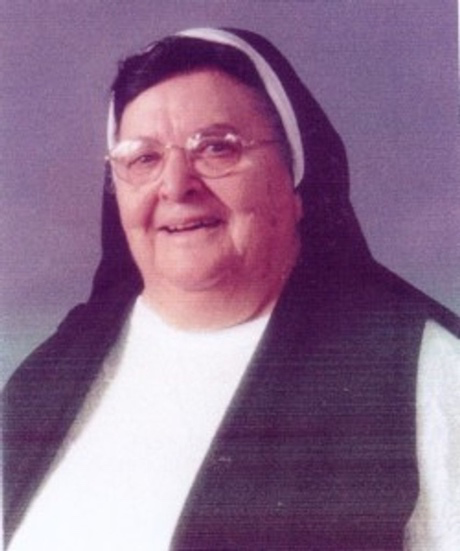
Sister Mary Gabriella Guidry, born Mae Wilder Guidry in 1914 at Lake Charles, Louisiana, was the daughter of Willie Parker Guidry and Sophie Duplechin. She professed her perpetual vows to the Congregation of the Sisters of the Holy Family on 31 May 1941. She ministered to God’s people throughout south Louisiana, Galveston & San Antonio, Texas as well as Belize, Central America. Sister Mary Gabriella Guidry died at the Motherhouse of the Sisters of the Holy Family in New Orleans, Louisiana on 2 August 2003 after over 71 years of service to her people.
Sister Daniel Betty Guidry of Arnaudville, Louisiana was a member of the Congregation of the Marianites of the Holy Cross. She was an educator and in 1976 was principal of the Little Flower School (Catholic) in Arnaudville. She also taught at the elementary level at St. Margaret Catholic School in Lake Charles, Louisiana.
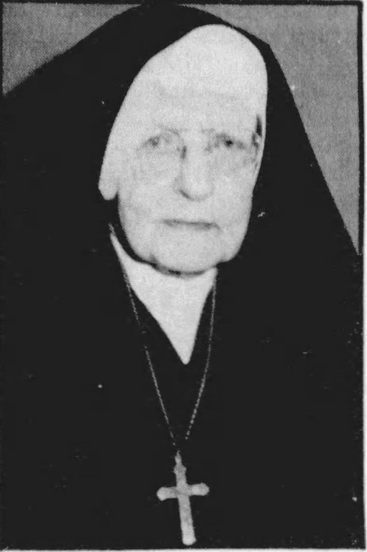
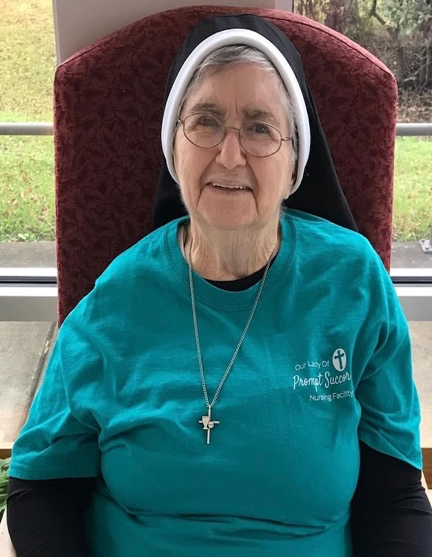
Sister Mary Stanislaus Guidry died on 6 January 1965 at St. Louis, Missouri. She was a member of the Sisters of Mercy.
*Here the term “Nuns” to refer to both Nuns and Sisters. Technically, a Nun has a cloistered life within a convent spending her time in prayers, silence and working within the enclosure. A Nun takes a solemn vow of poverty, chastity and obedience completely renouncing ownership of worldly goods. A Sister lives an active, apostolic lifestyle and works in the world engaging in ministries like healthcare, teaching and social work. She takes a simple vow of poverty, chastity and obedience and retains inheritances and property; however, she gives up personal use and revenue from them.