Survival of a Family: The Remaining Sons of Claude Guedry and Marguerite Petitpas (Claude, Charles, Alexis, Claude and Joseph)
A Continuing Series of Articles on the Children of Claude Guedry and Marguerite Petitpas
- The Migration of the Guédry Family during the 18th Century
- The Family of Jean-Baptiste Guédry and Madeleine Mius d'Azy
- The Family of Augustin Guédry and Jeanne Hebert
- Update - The Family of Augustin Guédry and Jeanne Hebert
- The Family of Marie-Joseph Guedry and Phillipe Dorion
- The Family of Pierre Guidry and Marguerite Brasseau
- Update - The Family of Pierre Guidry dit Labine and Marguerite Brasseau
- The Family of Paul Guidry dit Jovial and Anne Mius d'Entremont d'Azit de Pobomcoup
- The Family of Francoise Guedry & Jean LeJeune
- The Remaining Sons of Claude Guedry and Marguerite Petitpas Current
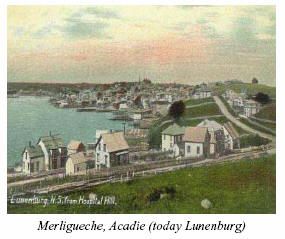
Struggling to survive became a way of life for Claude Guedry and his family. Living in the small Amerindienne community of Merligueche, Acadie (today Lunenburg) the Guedry and Petitpas families learned from their neighbors the Mi’kmaq how to use the bounty of the sea and the woods. These Acadian families became expert coasting pilots, fishermen, traders and even farmers. Danger was a constant companion of the early Acadian. A minor illness could be fatal; a slip could rob one of his life. Five sons of Claude Guedry and Marguerite Petitpas disappear from the records as young men. What was their fate? Did they die young or did they disappear into the woods - never to appear in the records again?
Because of the intimate relationship the Guedry and Petitpas families had with the Mi’kmaq at Merligueche, the sons of these families often intermarried with the Mi’kmaq. Sometimes the couple chose to live with the Mi’kmaq; other times they lived with the Acadians.
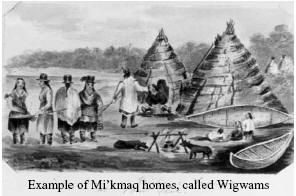
Today the name Labrador occurs frequently in the Mi’kmaq nation. We know that Paul Guedry was often referred to as “Old Labrador”. Could this be a derivation of the “dit” name LaVerdure which Claude Guedry and several of his sons were called? Could the Labrador of today among the Mi’kmaq be descendents of those Guedry men of yesterday who married into the Mi’kmaq nation?
The Census of Acadie for 1686 1 listed at Merligueche “La Verdure 35; Sa femme 25 et un Enfant” (La Verdure 35; his wife 25 and a child). The La Verdure mentioned was Claude Guedry dit La Verdure, the husband of Marguerite Petitpas. Who was the child censused with Claude Guédry and Marguerite Petitpas? No age was given for the child in the census. By 1686 Claude Guédry and Marguerite Petitpas had possibly six children between them: Abraham Dugas (born about 1678), Marguerite Dugas (born about 1680), Jeanne Guédry (born about 1681), Claude Guédry (born about 1682), Jean-Baptiste Guédry (born about 1684) and Charles Guédry (born about 1686). It is uncertain which of these children Monsieur de Meulles, the census-taker, listed in the Census of 1686; however, it was probably not Charles Guedry since he would have been denoted as “petite enfant” (i.e., an infant).
Claude Guedry , son of Claude Guedry and Marguerite Petitpas, born about 1682, appeared only twice in the records. In the Census of Port Royal, Acadie for 1698 2 , 3 , 4 Claude was the 16-year old son of Claude Guedry and Marguerite Petitpas. He was not with his family at La Heve during the Census of 1708. He would have been a man of 26 years at this time. Could he have married a Mi’kmaq and lived with his wife’s family at this time? In the summer of 1722 the Indians of Maine started a war against the people of New England. Known variously as the “The Three Years War”, “Rale’s War”, “Lovewell’s War” and “Governor Dummer’s Indian War”, this confrontation eventually reached the Merligueche area when the English blamed not only the Indians, but also the Acadians of the region since they had close alliances with the Mi’kmaq. Four sons of Claude Guedry and Marguerite Petitpas - Claude, Philippe, Augustin and Paul - were captured by the English in the fall of 1722 and with their families sent first to New Hampshire and then to Boston - being held as prisoners of war for about a year 5 . They returned to Acadie by September 1723. Claude Guedry was listed in the document as “Gload Gedery and his wife”. Apparently by 1722 Claude had married although the name of his wife is not known. Could she have been Mi’kmaq? After 1722 we no longer find any trace of Claude Guedry or his wife.
We know of no son of Claude Guedry and Marguerite Petitpas named Philippe. In the document he was listed as “Phillip Gedery, his wife and family”. This would indicate that Philippe had married and had at least one child. Could he actually have been Jean Baptiste Guedry, husband of Madeleine-Marguerite Mius dit d’Azy, who by 1722 had at least two children?
Charles Guedry , born about 1686, also first appeared in the Census of Port Royal for 1698 2 , 3 , 4 in which he was the 12-year old son of Claude Guedry and Marguerite Petitpas. In 1703 he was living alone at Cobequid, Acadie (today Truro) 6 . By 1708 he had returned to his parent’s home near La Heve as a single, 21-year old man 3 , 7 . La Heve (today near LaHave) was a small coastal community immediately southwest of Merligueche. Claude Guedry, Marguerite Petitpas and their family lived near Merligueche.
There has been speculation that Charles Guedry married a Mi’kmaq possibly named Morningstar and had two children named Claude, born either about 1714 or 1726, and Jacques, born about 1724. To date no source confirming this marriage has been located. A recent article in “Generations” 8 discussed the possible parentage of Claude Guedry. It seems unlikely that Charles Guedry was his father. Furthermore, the records strongly indicate that Jacques Guedry was the son of Paul Guedry and Anne-Marie Mius d’Azy and not Charles Guedry. After 1708 Charles Guedry disappears from the records.
Alexis Guedry , the fourth child of Claude Guedry and Marguerite Petitpas, appeared only in the Census of Port Royal for 1698 in which he was a boy of ten years 2 , 3 , 4 . No other record of Alexis Guedry has been located. What was his fate in life?
Claude Guedry and Marguerite Petitpas bore a second son named Claude Guedry , born about 1694. In the Census of Port Royal for 1698 2 , 3 , 4 he was a four-year old boy. In 1708 Claude was living at Merligueche with his parents and siblings as a 16-year old young man 7 . After 1708 Claude Guedry disappears from the record. What became of this young man? Did he marry a Mi’kmaq woman and chose to live among his wife’s family? Did he suffer a tragedy and lose his life? Did he prefer the life of the woods over that of civilization?
Joseph Guedry , born about 1695, appeared as the son of Claude Guedry and Marguerite Petitpas in the Census of Port Royal for 1698 2 , 3 , 4 . At this time he was a three-year old child. By 1708 he had moved with his parents to Merligueche7. On 13 May 1725 Joseph was a sponsor during the baptism of Paul Dugast, son of Francois Dugast and Claire Bourk. In this document he was listed as “Joseph Guedry, son of Claude Guedry inhabitant of Merligueche” 9 , 10 . We no longer find a trace of Joseph Guedry after 1725.
References
- "Recensement fait par Monsieur De Meules Intendant de la nouvelle france; de tous les Peuples de Beaubassin, Riviere St. Jean, Port Royal, Isle Percee et autres Costes de L'Acadie, sy estant luy mesme transporte dans chacunes des habitations au commencement de l'année 1686." (Census of Acadie for 1686) at the Archives Nationales de France - Le Centre des Archives d'Outre-Mer,(Col, G1 466, No. 10). [Also at the National Archives of Canada (transcribed copy) (MG1, Series G1, Vol. 466, No. 10 and on Microfilm No. C-2572)].
- "Recensement des habitans du Port Royal leurs familles terre en valeur Bestiaux Arbres fruitiers et fusils Pour l'année 1698" (Census of Port Royal for 1698) at the Archives Nationales de France - Le Centre des Archives d'Outre-Mer,(Col, G1 466, Nos. 18-20). [Also at the National Archives of Canada (transcribed copy) (MG1, Series G1, Vol. 466, Nos. 18-20 and on Microfilm No. C-2572)].
- White, Stephen A., Dictionnaire Généalogique des Familles Acadiennes - Première Partie 1636 á 1714 en Deux Volumes (Centre d'Etudes Acadiennes - Université de Moncton, Moncton, New Brunswick, Canada, 1999), p. 772.
- Casgrain, Abbé H. R. and Rameau de Saint-Père, François-Edme, Collection de Documents Inédits sur le Canada et L'Amérique Publiés par Le Canada-Français (L.-J. Demers et Frére, Québec, Québec, Canada, 1888-1890), v. 3 pp. 169.
- d'Entremont, Father Clarence-Joseph, Histoire du Cap-Sable de L'An Mil au Traite de Paris, 1763 (Hebert Publications, Eunice, LA, 1981) pp. 1595-1597, 1615-1616, 1622-1623, 1625.
- "Recensement des habitans de la province de l'acadie Pour 1703" (Census of Acadia in 1703) at the Archives Nationales de France - Le Centre des Archives d'Outre-Mer (Col, G1 466, No. 25). [Also at the National Archives of Canada (transcribed copy) (MG1, Series G1, Vol. 466, No. 25 and on Microfilm No. C-2572)].
- "Recensement genal fait au mois de Novembre mile Sept cent huit de tous les Sauvages de l'Acadie qui resident dans la Coste de L'Est, Et de ceux de Pentagouet et de Canibeky; famille par famille, Leurs ages Celuy de Leurs femmes et Enfants .. Recapitulation a la fin de la quantite d'homme Et de garcons capables valer a La guerre Comme aussy Le recensement des francois Establis a La d'elle Coste de L'Es" (Census of Acadia in 1708) at the Newberry Library (E. E. Ayer Collection) in Chicago, IL. ). [Also at the National Archives of Canada (transcribed copy) (MG18, Series F18].
- Guidry, Marty, "Generations" (Newsletter of the Les Guidry d'Asteur Association), v. 4 #2 (Summer 2006), pp. 14-20.
- "St-Jean-Baptiste de Port-Royal Catholic Church Records" (Public Archives of Nova Scotia, Halifax, Nova Scotia) [Microfilm CEA F1018 at Centre d'Etudes Acadiennes / Université de Moncton / Moncton, New Brunswick, CANADA E1A 3E9].
- Rieder, Milton P., Jr. and Rieder, Norma Gaudet, Acadian Church Records, Volume IV (Port Royal, 1716-1729) (Milton P. Rieder, Jr. and Norma Gaudet Rieder, Metairie, LA, 1983) p. 58.