A Moment of Self-Discovery
For as long as I can remember, I have taken a keen interest in North American Aboriginal ("Indian") history. For whatever reason, I developed early on empathy toward North American Aboriginal people and an interest in their cultures of long ago. At age ten, a comic book titled Indian Chief was my hands- down favourite; and I well recall my feelings of profound disappointment and dismay whenever the Indians lost out to the cowboys and the cavalry (which they always did) in the Wild West movie shows of my benighted childhood.
Once in university, I chose archaeology as my career because that way I could pursue my desire to explore and learn first-hand about Aboriginal history. For many years I was, and quite frankly still am, at a loss to explain this abiding fascination of the Aboriginal past. My upbringing as an Air Force brat was strictly mainstream Canadian; never once was it suggested to me by my parents or relatives that my heritage was anything but European.
In the summer of 2001, my wife and I were visiting family in Nova Scotia. Shortly before we were scheduled to return home to Winnipeg, a major disruption in airline scheduling (9/11) left us temporarily stranded. As it turned out, this unanticipated turn of events was to prove instrumental to my coming face-to-face with a hitherto unfamiliar aspect of my roots. With my holidays now unexpectedly prolonged for several more days, I decided on a whim to visit a cousin of mine who lived in the community that I was visiting.
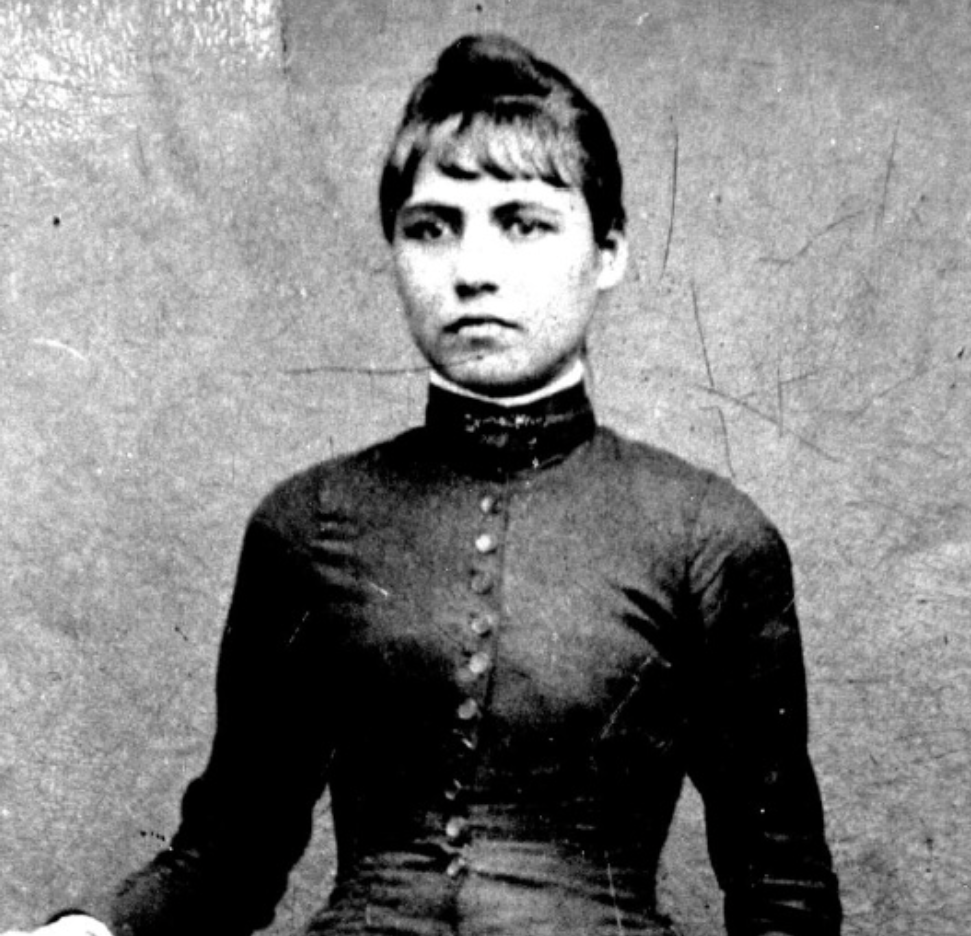
It so happened that I had never seen a photograph of my paternal grandfather, and I wondered if my cousin might have one to show me. Well, not only did he have a picture of my/our grandfather; he also had a pair of ancient tintype photographs of the old man's parents (our shared great-grandparents) as well. In a fraction of a second and entirely by accident, I learned something about myself for which I was totally unprepared: upon seeing the image of my great- grandmother, it was immediately clear from her facial features and complexion that the young woman gazing out at me (over my left shoulder, actually) was Aboriginal. I pressed my cousin for assurance that the woman in the heirloom picture was truly who he said it was and not someone else, and he was insistent that she was indeed our ancestor.
Had I been more familiar at the time with my genealogy and family history, such a revelation would have come as no surprise. My ancestry on my father's side is Acadian, and subsequent historiography disclosed to me that intermarriage between the Acadians and the Mi'kmaq people of the Maritimes was quite common during the centuries following the first arrival of the French in eastern Canada. Indeed, Father Pierre Maillard, the celebrated "Apostle to the Micmacs," had written in 1753 that he did not expect more than 50 years would pass before the French colonists would be so mixed with the Indigenous population that it would be impossible to tell them apart in terms of physical appearance.
My ancestral community from as far back as the 1760s is situated in what had long been an important summer meeting place and the site of a Christian mission for Segepenegatig Mi'kmaq on Nova Scotia's Eastern Shore. The historical records make it clear that the Acadian settlers and the Natives were frequently on good terms with each other at that locality and elsewhere in what is now Nova Scotia, and that intermarriage was often the outcome.
So, at the age of 56, I learned something that I had never before even remotely suspected: I am Metis and hence of Aboriginal descent. That, of course, doesn't explain my interest in "Indians" during my early uninformed childhood, but the coincidence and the irony are there nonetheless.
[NOTE: Leo Pettipas is a world-renown anthropologist and archaeologist residing in Winnipeg, Manitoba. He was born in Chezzetcook, Nova Scotia and moved west for his education and career. He was inducted into the Les Guédry et Petitpas d'Asteur Circle of Distinction in 2015.]