Extant Acadian Records - Part V: Acadian Church Records France, England, Caribbean, South America (Post-Deportation: 1755-1800)
- Part I: Pre-Deportation: 1613-1759
- Part II: United States & Caribbean (Post-Deportation: 1755-1800)
- Part III: Canada - Québec, Ontario, British Columbia (Post-Deportation: 1755-1900)
- Part IV: Canada (NS, NB, PEI & NL) and St. Pierre et Miquelon (Post-Deportation: 1755-1800)
- Part V: France, England, Caribbean, South America (Post-Deportation: 1755-1800) Current
FRANCE
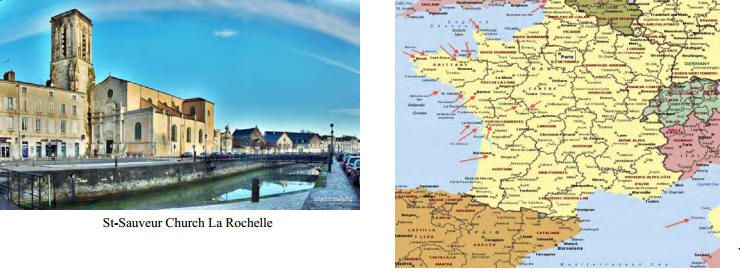
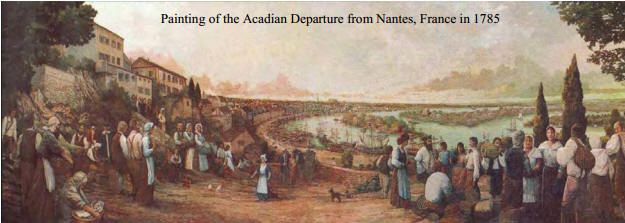
Although a few Acadians may have reached France before 1758, the majority of Acadians deported to France came from île Royale (Cape Breton Island) and île Saint-Jean (Prince Edward Island) after the Second Fall of Louisbourg (27 July 1758) and the capitulation of Île Saint-Jean (17 August 175. Sensing deportation on the horizon, many Acadians from these two formerly French territories escaped to New Brunswick, which was still possessed by France. Hundreds of Acadians, however, were captured before they could flee across the Northumberland Strait. In September 1758 the British began deporting Acadians from Île Saint-Jean and Île Royale to France with the first Acadians arriving in Saint-Servan, France in early November 1758. The deportations from these two islands continued through early 1759. During the next four years several smaller groups of Acadians reached France including the surviving Acadians who were deported to Virginia in November and December 1755 and subsequently sent to England in May 1756. In June 1763 they departed England for France.
The Acadians reaching France initially disembarked at the Atlantic seaports of Ile d’Aix, La Rochelle, Rochefort, St. Malo, Brest, Cancale, Cherbourg, Boulogne-sur-Mer, Le Havre, Morlaix, Dunkerque, Calais and Bordeaux. After disembarking, some Acadians began to move to nearby communities. Eventually, they moved up and down the Atlantic seacoast searching for their immediate and extended families and seeking employment.
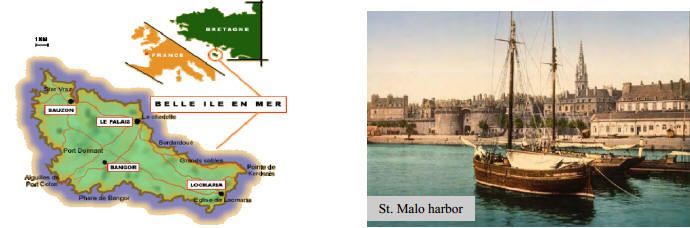
In later years the French government made several attempts to relocate the Acadians within France and in French colonies so that the Acadians would have jobs and would become permanent residents of France. Within or near France these agricultural "experiments" included the Belle Île-en-Mer, Poitou (Châtellerault) and Corsica areas. The Corsica experiment never materialized fully and no church records exist for Acadians planning to participate in it.
In 1539 King Francis I decreed by ordinance that Catholic priests would keep registers of baptisms. In 1579 marriages and burials were added. In 1667 King Louis XIV required that duplicate registers be kept and that one set of registers be deposited in the Greffe de la Senechaussee (forerunner of today’s Archives Départementa. ). After the French Revolution and the reorganization of France into departments the registers were placed in the Archives Départementales where, with few exceptions, they are today.
To determine where specific church records may be located, one needs to know the commune (town) where the birth, marriage or death occurred. A Catholic church typically served residents of several communes in the vicinity. Knowing the name of the commune, one can determine the department and the location of the Archives Départmentales where the records are maintained.
Several Guédry families lived in the coastal French communes during the period 1758 - 17. Their baptisms, marriages and burials are recorded in parish registers maintained in various Archives Départemental. These include the families of:
• Charles Guédry and his two wives Madeleine Hébert and Agnès Bourg -
Ille-et- Vilaine Department (Bonnaban, La Gouesniére, Pleurtuit, Saint-Servan, Saint-Suliac); Côtes-d’Armor Department (Plouer); Loire-Atlantique Department (Saint-Donatien-de-Nantes, Saint-Similien-de-Nantes); Vienne Department (Châtellerault)
* Marie Victoire Guédry and her husband Jean-Charles Boudrot -
Loire-Atlantique Department (Saint-Donatien-de-Nantes, Saint-Similien-de-Nantes); Côtes-d'Armor Department (Plouer)
• Claude Guédry and his two wives Anne LeJeune and Anne Moyse -
Ille-et-Vilaine Department (Chateauneuf, Saint-Malo, Saint-Servan, Saint-Suliac)
• Jean BaptisteGuédry and his wife Marguerite LeBert -
Côtes-d’Armor Department (Plouer); Loire-Atlantique Department (Saint-Martin-de-Chantenay, Saint-Nicolas-de-Nantes); Vienne Department (Châtellerault)
• Joseph Guédry and his wife Madeleine Commaux -
Ille-et-Vilaine Department (Saint-Suliac); Loire-Atlantique Department (Paimboeuf, Saint-Donatien-de-Nantes, Saint Martin-de-Chantenay); Vienne Department (Châtellerault, Monthoiron)
• Pierre Guédry and his wife Marie-Josephe LeBert -
Côtes-d’Armor Department (Plouer); Loire-Atlantique Department (Saint-Donatien-de-Nantes, Saint-Martin-de-Chantenay); Vienne Department (Châtellerault)
• Julien Bourneuf, widower of Jeanne Guédry -
Ille-et-Vilaine Department (Saint-Servan); Charente-Maritime Department (Rochefort)
• Judith Guédry and her husband Jean Cousin -
Loire-Atlantique Department (Saint-Martin-de-Chantenay); Vienne Department (Cenan, Châtellerault)
• Françoise Guédry and her husband Jean LeJeune -
Ille-et-Vilaine Department (Chateauneuf, Saint-Enogat, Pleurtuit, Saint-Malo, Saint-Servan, Saint-Suliac); Côtes-d’Armor Department (Pleslin, Ploubalay, Tremereuc); Loire-Atlantique Department (Saint-Croix-de-Nantes, Saint-Donatien-de-Nantes, Saint-Martin-de-Chantenay, Saint-Similien-de-Nantes); Vienne Department (Châtellerault)
• Marie JosepheGuédry and her two husbands Benjamin Mius and Claude LeBlanc -
Ille-et-Vilaine Department (Chateauneuf, La Gouesnière. Saint-Malo, Saint-Meloir-des-Ondes, Saint-Servan); Morhiban Department (Belle-Île-en-Mer [Sauzon]); Loire-Atlantique Department (Saint-Similien-de-Nantes)
• Marguerite Guédry and Pierre Braud Family -
Loire-Atlantic Department (Saint-Martin-de-Chantenay)
The baptismal, marriage and burial records of the Petitpas family in France after the deportation are in several Archives Départmental. These include the families of:
• François Petitpas and his wife Marie Harotte -
Charente-Maritime Department (Rochefort); Ille-et-Vilaine Department (Dinan, Saint-Servan)
• Jacque s Petitpas and his wife Marie-Jeanne Darambourg -
Ille-et-Vilaine Department (Saint-Servan)
• Judith Peitpas and her husband Marc La Sonde -
Côtes-d’Armor Department (St-André-des-Eaux, Tressaint); Ille-et-Vilaine Department (Bécherel, Saint-Malo, Saint-Thual); Loire-Atlantique Department (Saint-Similien)
An excellent resource for locating images of the original records of the French departments is the GeneaNet website at:
http://en.geneanet.org/first-step/search-your-french-ancestors/online-departmental-archives
France (Charente Maritime Department)
Communes within Charente Maritime Department Where Acadians Lived
Île d’Aix (St Martin Catholic Church)
Île d’Oléron ( St André deDolus d’Oléron Catholic Church; St Pierre de Saint Pierre d’Oléron
Catholic Church; St Denis de Saint Denis d’Oléron Catholic Church)
La Rochelle ( St Sauveur Catholic Church)
Rochefort (Notre Dame Catholic Church)
Original Documents Located at:
Archives départementales de la Charente-Maritime
35, rue François-Vaux-de-Foletier
17042 LA ROCHELLE Cedex 1
France
Telephone: 011 33 5 46 45 17 77
E-Mail Address: archives@cg17.fr
Original Record Images of Charente Maritime Department - Internet
Images of the original Catholic Church parish registers are available online at:
http://charente-maritime.fr/archinoe/registre.php
France (Côtes d'Armor Department)
(Note: Côtes-d'Armor Department was formerly Cotes-du-Nord Department)
Communes within Côtes d'Armor Department Where Acadians Lived
Langrolay-sur-Rance (St Laurent Catholic Church)
Mégrit (St Pierre et St Paul Catholic Church)
Plélo (St Pierre et St Paul Catholic Church)
Plérin (St Laurent de la-Mer Catholic Church)
Pleslin (Ste-Brigide Catholic Church)
Pleudihen-sur-Rance (Notre-Dame Catholic Church)
Plouagat (St Pierre Catholic Church)
Ploubalay (St Pierre et-St-Paul Catholic Church; St-Cadreuc Catholic Chapel)
Plouër-sur-Rance (Catholic Chapel of the Souhaité)
Saint-André-des-Eaux (St André Catolic Church)
Saint-Cast (St Cast Catholic Church)
Saint-Hélen (St-Hélen Catholic Church)
Saint-Samson (St Samson Catholic Church)
Tréméreuc (St Laurent Catholic Church)
Tressaint (St Jacques et St Philippe Catholic Church)
Trigavou (Ste Brigide Catholic Church)
Original Documents Located at:
Archives départementales des Côtes-d'Armor
7, rue François-Merlet
22000 SAINT-BRIEUC
France
Telephone: 011 33 2 96 78 78 77
E-Mail Address: archives@cg22.fr
Original Record Images of Côtes d'Armor Department - Internet
Images of the original Catholic Church parish registers are available online at:
http://sallevirtuelle.cotesdarmor.fr/EC/ecx/connexion.aspx
France (Finistère Department)
Communes within Finistère Department Where Acadians Lived
Brest (St-Sauveur Catholic Church)
Morlaix (St Melaine Catholic Church)
Original Documents Located at:
Archives départemtales du Finistère
5 allée Henri Bourde de la Rogerie
29000 QUIMPER
France
Telephone: 011 33 2 98 95 91 91
E-Mail Address: archives.departementales@cg29.fr
Original Record Images of Finistère Department - Internet
Images of the original Catholic Church parish registers are available online at:
Archives Finistère - Catholic Church Parish Registers
France (Gironde Department)
Communes within Gironde Department Where Acadians Lived
Bordeaux (Notre Dame Catholic Church; St Pierre Catholic Church; St André Catholic Cathedral)
Original Documents Located at:
Archives départeme de la Gironde
72-78 cours Balguerie Stuttenberg
33300 BORDEAUX
France
Telephone: 011 33 5 56 99 66 00
E-Mail Address: archives.gironde@cg33.fr
Original Record Images of Gironde Department - Internet
Images of the original Catholic Church parish registers are available online at:
http://gael.gironde.fr/etat-civil-search-form.html
France (Ille et Vilaine Department)
Communes within Ille et Vilaine Department Where Acadians Settled
Bécheral (Notre Dame Catholic Church)
Bonnaban
Cancal (St-Meen Catholic Church)
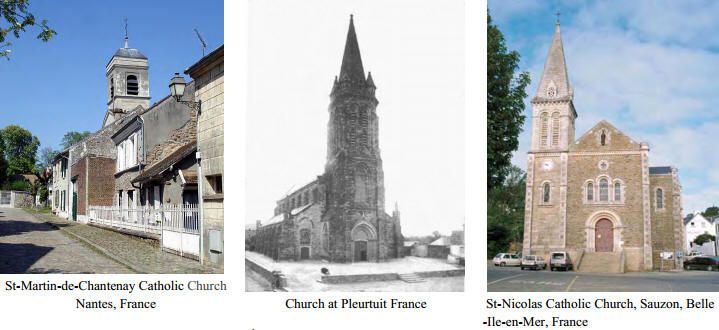
Châteauneuf (St-Nicolas Catholic Church)
Dinan (St Malo Catholic Church)
La Gouesniére (Notre Dame Catholic Church)
Meillac (St-Martin Catholic Church)
Paramé (St Michel Catholic Church)
Pleurtuit (St Pierre Catholic Church)
Saint-Briac-Sur-Mer (St-Briac Catholic Church)
Saint-Coulom b (St Colomban Catholic Church; St Vincent Frerrier Catholic Church)
Saint-Énogat (St Énogat Catholic Church)
Saint Ideuc (St-Ideuc Catholic Church)
Saint-Jouandes-Guérets (St Jean Baptiste Catholic Church)
Saint-Lunaire (St Lunair Catholic Church)
Saint-Malo (St-Vincent-de-St-Malo Catholic Cathedral)
Saint-Méloir -des-Ondes (St Mélior Catholic Church)
Saint-Servan (Ste Croix de St Servan Catholic Church)
Saint-Suliac (St Suliac Catholic Church)
Saint-Thual (Ste Trinité Catholic Church)
Hotel Dieu (hospital - Saint-Malo) (St Sauveur Catholic Chapel)
Original Documents Located at:
Archives départe les d’Ille-et-Vilaine
1 rue Jacques-Léonard
35000 RENNES
France
Telephone: 011 33 2 99 02 35 53
E-Mail Address: archives@cg35.fr
Postal Address
Archives départementales d’Ille-et-Vilaine
1 avenue de la prefecture
CS 24218
35042 Cedex RENNES
France
Original Record Images of Ille et Vilaine Department - Internet
mages of the original Catholic Church parish registers are available online at:
http://archives-en-ligne.ille-et-vilaine.fr/thot_internet/FrmSommaireFrame.asp
France (Loire Atlantique Department)
Communes within Loire Atlantique Department Where Acadians Lived
Hôtel-Dieu ( hospital)
Paimboeuf (St Louis Catholic Church)
Saint-Clément-de-Nantes (St Clément Catholic Church)
Saint-Donatien-de-Nantes (St-Donatien-et-St-Rogatien Catholic Basilica)
Saint-Jacques-de-Nantes (St-Jacques Catholic Church)
Saint-Léonard-de-Nantes (St- Léonard Catholic Church)
Saint-Martin-de-Chantenay (St Martin de Chantenay Catholic Church)
Saint-Nicolas-de-Nantes (St-Nicolas Catholic Basilica)
Saint-Pierre-de-Rezé (St Pierre-de- Rezé Catholic Church)
Saint-Sébastien (St- Sébastien Catholic Church)
Saint-Similien-de-Nantes (St-Similien Catholic Church)
Saint-Vincent (St Vincent Catholic Church)
Sainte-Croix-de-Nantes (St Croix Catholic Church)
Original Documents Located at:
Archives départementales des Loire-Atlantique
6 rue de Bouillé
BP 23505
44035 Cedex 1 NANTES
France
Telephone: 011 33 2 51 72 93 20
E-Mail Address: archives@cg44.fr
Nantes Municipal Archives
Mairie de Nantes
Archives municipales de Nantes
1 rue d’Enfer
44000 NANTES
France
Telephone: 011 33 2 40 41 95 85
Original Record Images of Loire Atlantique Department - Internet
mages of the original Catholic Church parish registers are available online at:
http://www.loire-atlantique.fr/jcms/cg_31241/fonds-d-archives-numerises
http://www.archives.nantes.fr/PAGES/ENLIGNE/page1.htm
France (Manche Department)
Communes within Manche Department Where Acadians Lived
Cherbourg (Ste Trinité Catholic Church)
Original Documents Located at:
Archives départem les de la Manche
103 rue Maréchal Juin
50010 SAINT-LÔ
France
Telephone: 011 33 2 33 75 10 10
E-Mail Address: archives@manche.fr or archives@cg50.fr
Original Record Images of Manche Department - Internet
Images of the original Catholic Church parish registers are available online at:
http://recherche.archives.manche.fr/?id=recherche_etat_civilFrance
France (Morbihan Department)
Commune within Morbihan Department Where Acadians Lived
Bangor [Belle-Île-en-Mer] (St- Pierre et St. Paul Catholic Church)
Le Palais [Belle-Île-en-Mer] ( St Gérons Catholic Church)
Locmaria [Belle-Île-en-Mer] (Notre-Dame-du-Bois-Tors Catholic Church)
Sauzon [Belle-Île-en-Mer] (St-Nicolas Catholic Church)
Mauron (St Pierre Catholic Church)
Original Documents Locatedat:
Archives départementales du Morbihan
80 rue des Vénètes
CS 52405
56010 VANNES Cedex
France
Telephone: 011 33 2 97 46 32 52
E-Mail Address: archives@cg56.fr
Original Record Images of Morbihan Department - Internet
Images of the original Catholic Church parish registers are available online at:
http://www.morbihan.fr/UserFile/media/AD56/consultation_application/index_et
at_civil.htm
France (Nord Department)
Communes within Nord Department Where Acadians Lived
Dunkerque (St Eloi Catholic Church)
Original Documents Located at:
Archives départementales du Nord
22 rue Saint-Bernard
59000 LILLE
France
Telephone: 011 33 3 59 73 06 00
E-Mail Address: archivedep@cg59.fr or archives@cg59.fr
Original Record Images of Nord Department - Internet
Images of the original Catholic Church parish registers are avalable online at:
http://www.archivesdepartementales.cg59.fr/?id=recherche_etat_civil
France (Pas de Calais Department)
Communes within Pas de Calais Department Where Acadians Lived
Boulogne-sur-Mer ( Notre Dame de l’Immaculée Conception Catholic Basiica;
St Nicolas Catholic Church)
Calais (Notre Dame Catholic Church)
Original Documents Located at:
Archives départementales du Pas-de-Calais
Centre Georges-Besnier
12, place Jean-Moulin (place de la Préfecture)
62018 ARRAS Cedex 09
France
Telephone: 011 33 3 21 21 61 90
E-Mail Address: archives@cg62.fr
Original Record Images of Pas de Calais Department
Images of the original Catholic Church parish registers are available for loan on microfilm.
France (Seine Maritime Department)
Communes within Seine Maritime Department Where Acadians Lived
Le Havre (St Joseph Catholic Church)
Original Documents Located at:
Archives départementales Seine-Maritime
Rue Henri-II-de-Plantagenêt
Pôle culturel Grammont
76100 ROUEN
France
Telephone: 011 33 2 35 03 54 95
E-Mail Address: archives@cg76.fr
Original Record Images of Seine Maritime Department Internet
Images of the original Catholic Church parish registers are available online at:
http://recherche.archivesdepartementales76.net/?id=recherche_guidee_etat_civil
France (Vienne Department)
Communes within Vienne Department Where Acadians Lived
Archigny (St Georges Catholic Churth)
Bonnes ( St André Catholic Church)
Bonneuil-Matours (St-Pierre Catholic Church)
Cenan (St Hilaire Catholic Church)
Châtellerault (St Jean L’Evangeliste Catholic Church; St Jacques Catholic Church;
Pouthume Catholic Church)
Chauvigny (St Pierre Catholic Church)
La Chapelle-Roux
Leigné-les-Bois (St Rémi Catholic Church)
Monthoiron ( St-Ambroise Catholic Church)
Senillé ( St André Catholic Church)
Targé ( St Georges Catholic Church)
Original Documents Located at:
Archives départem e la Vienne
30, rue des Champs-Balais
86000 POITIERS
France
Telephone: 011 33 5 49 03 04 05
E-Mail Address: archives@cg86.fr
Original Record Images of Vienne Department - Internet
Images of the original Catholic Church parish registers are available online at:
http://www.archives-vienne.cg86.fr/639-les-registres-paroissiaux.htm
ENGLAND
Without warning in November 1755 approximately 1038 Acadians arrived at Hampton Roads, Virginia on six ships. In January 1756 another ship carrying 112 Acadians arrived in Virginia. Initially Governor Dinwiddie of Virginia attempted to distribute these Acadians to Richmond, Hampton and Norfolk where apparently they were disembarked. In late March 1756 members of the Virginia House of Burgess encouraged Governor Dinwiddie to transport the Acadians to England as they posed a severe threat to Virginia. In May 1756 the Acadians were loaded onto four ships and transported to England.
In June 1756 the four transports arrived in England with approximately 1032 Acadians. They were disembarked at Falmouth (204), Bristol (289), Portsmouth (296) and Liverpool(243). The English housed the Bristol Acadians in some warehouses on Guinea Street at the extreme end of town. The Portsmouth Acadians initially were quartered in a barn in the nearby village of Forton; however, the conditions were deplorable and they were moved to Southampton and lodged in the Great Tower. The Falmouth Acadians were housed in a large barn on the Upper ergilliac Farm near Penryn. They later moved into some middle class houses. It is uncertain where the Liverpool Acadians lived.
Although the Acadians in England were not prisoners of war, their activities were restricted and they were not allowed to move outside their immediate living area. In 1756 the Acadians suffered greatly from smallpox with over 200 contracting the disease and several dying. Throughout their stay in England, the Acadians remained destitute - seldom being allowed to work and having to survive on a small government pension.
With the signing of the Treaty of Paris on February 10, 1763 ending the war between England and France, the Acadian exile in England ended. Although they weighed several options for their future, they accepted the opportunity to migrate to France. Between May and June 1763 four ships carrying 778 Acadians left the English ports of Southampton, Falmouth and Liverpool for St. Malo and Morlaix, France.
In addition to the Virginia Acadians, seven other Acadians left England for France in May 1763. These seven had been deported to France in 1758Q1759 and obtained jobs as sailors. While at sea off the coast of France, they were captured by the English and brought to England as prisoners of war. In 1763 they were allowed to leave England with the Virginia Acadians.
The Roman Catholic Church dominated in England prior to the reign of King Henry VIII; however, in 1534 King Henry VIII began the Church of England (Anglican Church) and by 1536 it became more prevalent. In the midQ1700s most English Catholics retreated to isolation and few Catholic churches existed in England. The Liverpool area was one of the few areas that had a Catholic majority. The other towns holding Acadians were Anglican. Although Acadians were buried in Anglican cemeteries, they rarely, if ever, were baptized or married in the Anglican Church.
There were no Acadians with the surname Guédry or Petitpas exiled to England.
Towns Within England Where Acadians Lived
Bristol
Falmouth
Liverpool (St. Mary, Woolton, Catholic Church; St. Mary, Liverpool, Catholic Church; St. Swithin, Gilmoss, Catholic Church)
Penryn (St. Gluvias Anglican Church)
Portsmouth
Southampton
Liverpool, Lancashire County, England
St. Mary, Woolten, Catholic Church (1756 - Present)
Church Road
Woolton, Liverpool, ENGLAND L25 5JF
Telephone: 011 44 151 428 2256
Original Documents (Containing Acadian Records) Located at:
Liverpool Record Office
Liverpool Central Library and Archive
William Brown Street
Liverpool, Merseyside, ENGLAND L3 BEW
Telephone: 011 44 151 233 5817
(Record Office Reference: 282 MAR/1/1)
Microfilm Copies of Original Documents Available at:
London Family History Centre of the Church of Jesus Christ of Latter-Day Saints
The National Archives of the United Kingdome (Reading Room)
Kew, Richmond, Surrey, UNITED KINGDOM TW9 4DU
Telephone: 011 14 020 7589 8561
Family History Library of the Church of Jesus Christ of Latter-Day Saints
35 North West Temple Street
Salt Lake City, Utah USA 84150
Telephone: 1Q866Q406Q1830
Microfilm 0396373 (Baptisms 1756Q1869; Marriages Burials 1802Q1855)
Microfilm 0396373 (Baptisms 1802Q1847; Marriages 1802Q1907; Burials 1856Q1901)
Images of the Original Documents Available on Ancestry.com at:
http://search.ancestry.com/search/db.aspx?dbid=2182
With images of the records of two Acadian marriages at:
http://search.ancestry.com/Browse/view.aspx?dbid=2182 iid=engl56170_282
QmarQ1Q1_m_00004_2
Helpful Literature
“Le Séjour des Acadiens en Angleterre et leurs traces dans les Archives Britanniques, 1756Q1763” by Régis Sygefroy Brun (La Société%Historique Acadienne; Volume IV No. 2; Cahier 32; July-September 1971), pp. 62-67. (Contains listing of two Acadian marriages in 1758 Baptismal Register)
St. Mary, Liverpool, Catholic Church (1707 - 2002)
Highfield Street
Liverpool, ENGLAND L3 6AA
Original Documents (Containing Acadian Records) Located at:
Liverpool Record Office
Liverpool Central Library and Archive
William Brown Street
Liverpool, Merseyside, ENGLAND L3 BEW
Telephone: 011 44 151 233 5817
(Record Office Reference: 282 HIG/1/1)
Microfilm Copies of Original Documents Available at:
Liverpool Record Office
Liverpool Central Library and Archive
William Brown Street
Liverpool, Merseyside, ENGLAND L3 BEW
Telephone: 011 44 151 233 5817
Images of the Original Documents Available on Ancestry.com at:
http://search.ancestry.com/search/db.aspx?dbid=2182 path=
(Note: Images of documents for the years 1756Q1763 are not available on Ancestry.com . A transcription of the records for these years was published in 1911 at the reference below.)
Helpful Literature
“Le Séjour des Acadiens en Angleterre et leurs traces dans les Archives Britanniques, 1756-1763” by Régis Sygefroy Brun (La Société Historique Acadienne; Volume IV No. 2; Cahier 32; July-September 1971), pp. 62-67. (Contains listing of several Acadian baptisms from the Baptismal Register)
“Catholic Registers of Liverpool, now St. Mary’s, Highfield Street, 1741-73” by Mrs. Seymour Spencer, J. S. Hansom and J. Gillow (Catholic Record Society, Londres; Volume 9; 1911) pp. 251-273. (Transcription of actual registers that include baptisms of several Acadians) A copy of the article can be viewed on pages 179-333 at:
http://archive.org/stream/miscellanea09cath#page/n195/mode/2up
St. Swithin, Gilmoss, Catholic Church (1757 - 2004)
Parkstile Lane
Gilmoss, Liverpool, ENGLAND L11 0BE
Telephone: 011 44 151 546 2186
Original Documents Located at:
Liverpool Record Office
Liverpool Central Library and Archive
William Brown Street
Liverpool, Merseyside, ENGLAND L3 BEW
Telephone: 011 44 151 233 5817
(Record Office Reference: 282 SWI/1Q3)
Microfilm Copies of Original Documents Available at:
London Family History Centre of the Church of Jesus Christ of Latter-Day Saints
The National Archives of the United Kingdome (Reading Room)
Kew, Richmond, Surrey, UNITED KINGDOM TW9 4DU
Telephone: 011 14 020 7589 8561
Family History Library of the Church of Jesus Christ of Latter-Day Saints
35 North West Temple Street
Salt Lake City, Utah USA 84150
Telephone: 1-866-406-1830
Microfilm 396363 (Baptisms 1757-1876; Marriages 1757-1777, 1842-1860;
Burials 1831-1856)
(Note: There do not appear to be any Acadian births, marriage or burials in
these records for the years 1756-1763.)
Helpful Literature
The website “The Roman Catholic Church of St Swithin, Gilmoss in the County of
Lacashire - Online Parish Clerks” contains transcripts of the birth, marriage and
burial records at:
http://www.lan-opc.org.uk/Liverpool/Gilmoss/stswithin/index.html
Penryn, Cornwall County, England
St. Gluvias Anglican Church (1318 - Present)
Church Hill
Penryn, ENGLAND TR10 8AJ
Telephone: 011 44 326 374 677
Original Documents (Containing Acadian Records) Located at:
Cornwall Record Office
Old County Hall
Truro, ENGLAND TR1 3AY
Telephone: 011 44 1872 323 127
(Record Office References: P72/1/3 [Baptisms 1747-1812; Marriages 1747-
1754; Burials 1747-1812] ; P72/1/4 [Marriages 1754-1768]; P72/1/38 [List
of Frenchmen Buried in 1759])
Microfilm Copies of Original Documents Available at:
London Family History Centre of the Church of Jesus Christ of Latter-Day Saints
The National Archives of the United Kingdome (Reading Room)
Kew, Richmond, Surrey, UNITED KINGDOM TW9 4DU
Telephone: 011 14 020 7589 8561
Family History Library of the Church of Jesus Christ of Latter-Day Saints
35 North West Temple Street
Salt Lake City, Utah USA 84150
Telephone: 1-866-406-1830
Microfilm 916890 (Baptisms 1599-1837)
Microfilm 916891 (Burials 1599-1837)
Microfilm 254162 (Baptisms 1747-1812; Marriages 1747-1754; Burials 1747-1812)
Microfilm 226196 (Marriages 1754-1837)
Microfilm 1595535 (Baptisms, Marriages, Burials 1598-1847)
Images of the Original Documents Available on FamilySearch.com. There are several Acadian burials in the second half of 1756 and in 1757 and one in 1759. They can be viewed at:
https://familysearch.org/search/image/index#uri=https%3A%2F%2Ffamilysearch.org%2Frecords%2Fwaypoint%2FMMVH-NP9%3An587553037 3Fcc 3D1769414
Helpful Literature
“Le Séjour des Acadiens en Angleterre et leurs traces dans les Archives Britanni-ues, 1756-1763” by Régis Sygefroy Brun (La Société Histori-ue Acadienne; Volume IV No. 2; Cahier 32; July-September 1971), pp. 62-67. (Contains listing of several Acadian burials at St. Gluvias Anglican Church Cemetery)
Cornwall Parish Registers. Marriages. Volume XIII by W. P. W. Phillimore and Thomas Taylor (Phillimore Co., London, 1908) pp. 251-273. (Transcription of actual marriage registers from St. Gluvias Anglican Church that includes the years 1756-1763 There do not appear to be any Acadian marriages.) A copy of the relevant pages 84-92 can be viewed at:
http://www.archive.org/stream/cornwallparishr02rowegoog#page/n87/mode/2up
or
https://dcms.lds.org/delivery/DeliveryManagerServlet?dps_pid=IE94184
CARIBBEAN
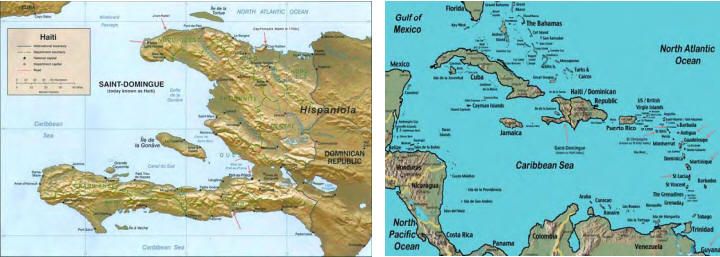
Prior to the Acadian deportations in the late 1750s and early 1760s a few Acadians went to Saint-Domingue (today Haiti). These were primarily sailors and possibly a few “filibustiers” (i.e., pirates). After the Seven Years War (1756-1763) France lost most of its territories of North America. French leaders determined to rebuild their empire in the Caribbean and South America. In 1763 they actively recruited Acadians in the American colonies to resettle in Saint-Domingue. One of the prime projects where France needed skilled laborers and farmers was the Môle Project at Môle Saint-Nicolas on the northwestern peninsula of Saint-Domingue. Here the French were building a massive naval base to protect the Windward Passage shipping lane between Saint-Domingue and Cuba. The French also wanted to populate Saint-Domingue and settled Acadians at various towns including Mirebalais, Cap-Français and Jacmel.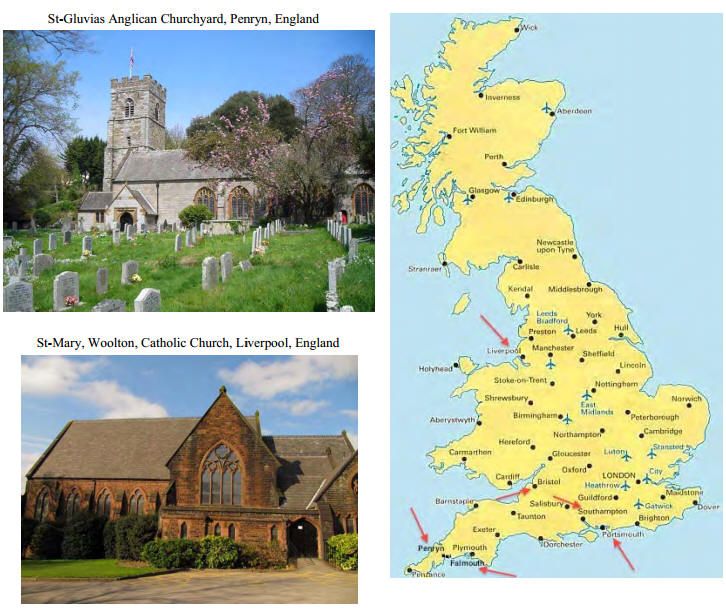
The recruited Acadians began arriving at Cap-Français, Saint-Domingue in late 1763 from where initially they were transferred to either Môle Saint-Nicolas or Mirebalais. After 1765 few, if any, Acadians migrated to Saint-Domingue. Initially, the Acadians who had been deported to the American colonies were excited about restarting their lives in a French territory. Soon after arriving in Saint-Domingue, however, they realized trouble lay ahead. The tropical climate and associated diseases began to decimate their families; the lack of suitable good land for farming limited their ability to become productive and independent; the harsh working conditions and poor food and supplies provided by the French government caused despair among the Acadians. By 1766 many Acadians began to seek better living conditions throughout Saint-Domingue and left their original settlement locations. At least one group of Acadians who reached Saint-Domingue in late 176- saw the horrible living conditions and opted to go to the Illinois country via the Mississippi River. On reaching Louisiana, however, these Acadians led by Joseph Broussard dit Beausoleil settled at the Attakapas Country. When Toussaint L’Ouverture led the slave rebellion in Saint-Domingue from 1791-180-, many Acadians fled to South Carolina and Georgia with a few reaching Louisiana.
Although the majority of the Acadians migrating to the Caribbean islands settled at Saint-Domingue, smaller numbers went to Martinique (Au Carbet, Basse-Pointe, Champflore, Fort-Royal, St-Pierre), Guadeloupe (Basse Terre, Petit-Bourg), Santa Lucia, Antigua, Saint-Christophe (today St. Kitts) and even briefly at the Dutch possession Saint-Eustache.
The registers for the various Catholic Church parishes of the Antilles (including Saint-Domingue) are kept in the Archives Nationales d’Outre-Mer in France. For many towns significant parts of the parish registers have been lost.
No records of Guédry or Petitpas families settling in the Caribbean Islands were located.
Caribbean (Saint,Domingue)
Villages within Saint, Domingue Where Acadians Lived
Northern Part of Island
Bombarde (St-François-de-la-Bombarde Catholic Church)
Cap-Français (Notre-Dame-du-Cap-Français-Catholic Church)
Dondon
Fort Dauphin (St-Joseph Catholic Church)
Grande-Rivière du Nord (Ste-Rose-de-la-Grande-Rivière Catholic Church)
Jean-Rabel (St-Jean-Baptiste Catholic Church)
Limbé
Limonade (Ste-Anne-de-Limonade Catholic Church)
Môle Saint-Nicolas (St-Charles-du-Môle-Saint-Nicolas Catholic Church)
Petite-Anse
Plain de Nord (St Jacques Catholic Church)
Western Part of Island
Arcahaye
Croix-des-Bouquets (Croix-des-Bouquets Catholic Church)
Gonaïves (St-Charles-Borromée Catholic Church)
Léogâne (Ste-Rose-de-Lima Catholic Church)
Mirebalais (St-Louis-de-Mirebalais Catholic Church)
Petite Rivière de l’Artibonite (St-Jérôme Catholic Church)
Port-au-Prince (Notre-Dame-de-l’Assomption Catholic Church)
Saint-Marc (St-Marc Catholic Church)
Southern Part of Island
Jacmel (St-Jacques-et-St. Philippe Catholic Church)
Jérémie (St-Louis-Roi-de-France Catholic Church)
Les Cayes (Notre-Dame-de-l’Assomption Catholic Church)
Petite Goâve (Assomption Catholic Church)
Original Documents Located at:
Archives Nationales d’Outre-Mer
29, chemin du Moulin de Testas
13090 AIX-EN-PROVENCE,
France
Telephone: 011 33 4 42 93 38 50
E-Mail Address: Anom.alx@culture.gouv.fr
Original Record Images of Saint,Domingue Available at:
Images of the surviving original Catholic church parish registers are available online at:
http://anom.archivesnationales.culture.gouv.fr/caomec-/recherche.php?territoire=SAINT-DOMINGUE
Caribbean Martinique)
Villages within Martinique Where Acadians Lived
Au Carbet (St-Jacques Catholic Church)
Basse-Pointe (St-Jean-Baptiste Catholic Church)
Champflore
Fort-Royal (today Fort-de-France) (Saint-Louis-du-Fort-Royal Catholic Church)
St-Pierre (Notre-Dame-de-Bon Port du Mouillage Catholic Church)
Original Documents Located at:
Archives Nationales d’Outre-Mer
29, chemin du Moulin de Testas
13090 AIX-EN-PROVENCE,
France
Telephone: 011 33 4 42 93 38 50
E-Mail Address: Anom.alx@culture.gouv.fr
Original Record Images of Martinique Available at:
Images of the surviving original Catholic church parish registers are available online at:
http://anom.archivesnationales.culture.gouv.fr/caomec-/recherche.php?territoire=MARTINIQUE
Caribbean Guadeloupe)
Villages within Guadeloupe Where Acadians Lived
Basse Terre (Notre-Dame-du-Mont-Carmel Catholic Church)
Petit4Bourg (Saint Therese of the Child Jesus Catholic Church)
Original Documents Located at:
Archives Nationales d’Outre-Mer
29, chemin du Moulin de Testas
13090 AIX-EN-PROVENCE,
France
Telephone: 011 33 4 42 93 38 50
E-Mail Address: Anom.alx@culture.gouv.fr
Original Record Images of Guadeloupe Available at:
Images of the surviving original Catholic church parish registers are available online at:
http://anom.archivesnationales.culture.gouv.fr/caomec-/recherche.php?territoire=GUADELOUPE
SOUTH AMERICA
After the French and Indian War and subsequent Treaty of Paris signed on 10 February 1763, France wanted to rebuild a new empire to replace the one it had lost in North America. Its leaders looked South to the French Caribbean Islands and South America. The Acadians residing in France were a target group for rebuilding the French Empire.
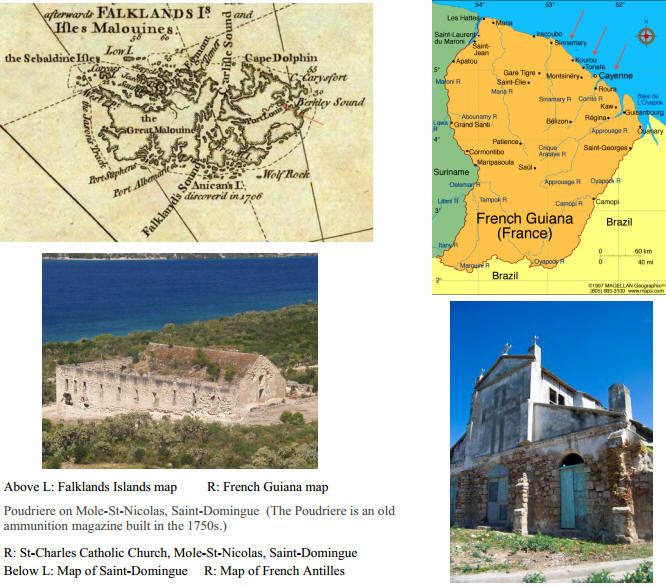
French Guiana
In late 1764 French officials began recruiting colonists for the French West Indies French Antilles) and French Guiana. The Acadians were quite wary of resettling in French Guiana due to the harsh climate; however, many Germans volunteered for the voyage. In 1763 thousands of new settlers began arriving in French Guiana on the northeastern coast of South America. To encourage Acadians to participate in this resettlement scheme, the French offered them greater incentives and threats of losing their government solde allowance).
Eventually, in late 1763 approximately 200 Acadians trekked to French ports at Le Havre, Saint-Malo, Morlaix and Boulogne for the long voyage to French Guiana. In the first months of 1764 the ships departed France for South America. Trouble was brewing for the nascent colony; however, as Germans responded to the offer in overwhelming numbers and by early 1764 over 11,000 were waiting at Rochefort for transport to French Guiana. After boarding ships with the Acadians, the Germans began to contract smallpox on the journey. In summer 1764 these ships began arriving on the Kouro River in French Guiana where the new colony was being established. By the end of 1765 over 14,000 German and Acadian settlers were in French Guiana - significantly more than the fledgling colony could support at the time. Many had contracted smallpox either during the voyage or shortly after arriving. As many as 10,000 succumbed to the disease and died. The 200 or so Acadians fared better than the Germans with over 100 surviving the initial impact of the disease and establishing a settlement at Sinnamary northeast of the Kourou River.
On 22 December 1764 about 100 Acadians at Boulogne-sur-Mur in France embarked on the Tréport and weighed anchor for Cayenne, French Guiana - southeast of the Kourou River. They arrived in early February 1765 after a relatively uneventful voyage. In March 1765 colonists from Louisbourg, Île Royale arrived at Sinnamary, French Guiana. Also, in 1765 about 100 Acadians from St-Pierre-et-Miquelon sailed to Cayenne, French Guiana.
During 1765 France realized the collapse of the Kourou Colony in French Guiana was imminent and wanted to move the Acadians back to France. Many accepted the offer and returned; however, several hardy souls chose to remain - eventually becoming poor, non-slaveholding farmers.
In 1765 at least three Guédry’s had settled in French Guiana: Marguerite Guédry (born about 1729), Marie Guédry (a widow born about 1745) and Marie’s sister Marguerite Guédry (born about 1748). Jacques Petitpas , his wife Marie Rambauts, their two sons and two daughters immigrated to French Guiana in the mid-1760s. Also immigrating to French Guiana was Marie Petitpas (born about 1732).
Falkland Islands
In the early 1760s Louis Antoine de Bougainville, a French military officer, petitioned the French government to allow him to settle Acadians on Îles Malouines (today the Falkland Islands) off the South American coast. The government granted him the right to settle the Falklands, but he found it difficult to recruit Acadians. On 15 September 1763 he sailed from France on the Aigle and the Sphinx with only two families totaling eleven Acadians and an additional 19 Acadian men aboard. Landing on East Falkland Island on 3 February 1764 with livestock and supplies, the Acadians quickly established Fort Saint-Louis on Berkeley Sound. Fort Saint-Louis was later called Port Louis.
A second recruitment attempt was more successful as word of the terrible conditions and the collapse of the French Guiana colony had filtered back to the Acadians in France. The cooler climate of the Falklands appealed to the Acadians. In April 1765 eighty Acadians from St. Malo landed on East Falkland Island. In 1766 a third group of 79 colonists, mostly Acadian, arrived to join the colony.
The Falkland Islands were strategically located and were viewed by both France and Britain as a potential naval base. In January 1765 Commodore John Byron, unaware of the Acadian settlement, landed on East Falkland Island and claimed it for Britain. In December 1766 Captain John McBride was sent by Britain to establish an outpost at Port Egmont, West Falkland Island. Finding the Acadian settlement, he ordered the colonists to leave or be invaded. At the same time France was transferring the Falkland Islands colony to Spain. On 27 April 1767 all but 95 of the colonists embarked on Spanish frigates for Montevideo. The fate of both the Acadians remaining on the island and those that sailed is clouded in uncertainty. Some Acadians did return to France in a miserable state in 1769, 1771 and 1775.
The Acadians’ life on treeless East Falkland Island was very difficult with rudimentary huts, an inhospitable climate, crops that were difficult to grow, few cattle to eat and having to hunt seals for meat.
There were no Guédry or Petitpas that settled on the Falkland Islands; however, the step-children of Jeanne Guédry , second wife of Julien Bourneuf, were in the first group of colonists to disembark on East Falkland Island. They were Anne Bourneuf with her husband Julien Mervin and their two children, Jeanne Bourneuf and Sophie Bourneuf. Anne, Jeanne and Sophie Bourneuf were the daughters of JulienBourneuf and his first wife Anne Hiomet.
South America (French Guiana)
Villages within French Guiana Where Acadians Lived
Cayenne (St Sauveur de Cayenne Catholic Church)
Kourou (Notre Dame de Kourou Catholic Church)
Sinnamary (St Mathieu des Apôtres Catholic Church)
Original Documents Located at:
Archives Nationales d’Outre-Mer
29, chemin du Moulin de Testas
13090 AIX-EN-PROVENCE,
France
Telephone: 011 33 4 42 93 38 50
EMail Address: Anom.alx@culture.gouv.fr
Original Record Images of French Guiana Available at:
Images of the surviving original Catholic church parish registers are available online at:
http://anom.archivesnationales.culture.gouv.fr/caomec2/recherche.php?territoire=GUYANE
South America (Falkland Islands)
Villages within French Guiana Where Acadians Lived
Fort Saint-Louis (also called Port Louis)
There was no church established on East Falkland Island during the period 1764-1767; therefore, no church records exist.