The Louisiana Slave Database & Louisiana Free Database and Slave Narratives
With the unprecedented success of the ABC TV miniseries “Roots” in 1977 and the earlier-published book of the same title by Alex Haley, African-Americans and other began researching the genealogy and history of American slaves in earnest. Initially, as Haley discovered, records were difficult to locate and information within the records was tantalizing, yet incomplete. As time passed, researchers have found new sources and techniques for researching American slave genealogy and history. It is not unusual today for a person to trace their African-American genealogy to a tribe in Africa although few have the money, time and resources as Haley did to visit Africa on extended trips and seek their genealogy further back in time through the oral history of the tribe.
Louisiana Slave Datatase & Louisiana Free Database
Dr. Gwendolyn Midlo Hall 1 , 2 , a Louisiana native and then-professor of history at Rutgers University in New Jersey, was doing research at the courthouse in Pointe Coupee Parish, Louisiana in 1984 when she discovered boxes of old notarial records containing a wealth of information on the slaves of that region. Captured by this intriguing information, Dr. Hall spent the next fifteen years gathering additional slave information from throughout Louisiana as well as from French, Spanish and Texan records.
Through her diligent, painstaking research, Dr. Hall amassed an unimaginable amount of information on over 100,000 slaves from Louisiana. The data included not only the slaves’ names, but also their genders, ages, occupations, illnesses, family relationships, ethnicity, places of origin, owners, prices paid by owners and other tidbits of their history rarely known before.
In addition to compiling extensive information on 100,666 Louisiana slaves, Dr. Hall also recorded information on the manumissions of 4,071 slaves in their route to freedom. She divided her work covering the time period 1719-1820 into two databases: the “Louisiana Slave Database” and the “Louisiana Free Database”.
In March, 2000 LSU Press published the two databases on a Compact Disk (CD) entitled “ Louisiana Slave Database and Louisiana Free Database 1719-1820 ” 3 . The CD’s soon sold out; however, the database was very cumbersome to use and difficult to search.
In 2001 ibiblio.org maintained by the University of North Carolina requested that Dr. Hall let them place the databases on their website. She agreed with the condition that they create a search engine for accessing the records easily. Unfortunately, ibiblio.org created a search engine only for the Slave Database and not the Free Database. They also made some changes to the databases; however, these are minor in nature. In November, 2001 ibiblio.org published the databases on their web portal under the name “Afro-Louisiana History and Genealogy 1719-1820” 4 . In addition, to the searchable database, the website also includes Dr. Hall’s statistical calculations and three pre-set searches “African Names”, “Revolts” and “Runaways”. To access the “ Afro-Louisiana History and Genealogy 1719-1820 ” database on ibiblio.org, click on this link:
http://www.ibiblio.org/laslave/ (Slave Database)
Later Ancestry.com asked Dr. Hall for permission to incorporate the two databases into their search engine. Dr. Hall agreed provided Ancestry.com did not charge for their use. In 2003 Ancestry.com opened the two databases to the public free of charge under the titles “ Louisiana Slave Records, 1719-1820 ” 5 and “ Louisiana Freed Slave Records, 1719-1820 ” 6 . The two databases can be accessed on Ancestry.com at:
http://search.ancestry.com/search/db.aspx?dbid=7383 (Slave Database)
http://search.ancestry.com/search/db.aspx?dbid=7382 (Freed Database)
Before searching either the ibiblio.org or the Ancestry.com databases, one should read the brief explanation on how to conduct a search and tips for improving the search at:
http://www.ibiblio.org/laslave/explain.php (How-To Search the Databases)
Dr. Hall’s detailed description of the Louisiana Slave Database and the Louisiana Free Database 7 discusses the underlying format of these databases and provides statistical analyses of the information in the databases. Read her description at:
http://www.afrigeneas.com/library/louisiana/ (Description of Databases)
Although the Slave and Free databases provide a wealth of information on slaves in Louisiana during the 1700’s and early to mid-1800’s, these records do not include all slaves in Louisiana during this time period. Often additional information on slaves can be found in estates and conveyance records in Louisiana parish courthouses. Also, slaves during this period almost always were known by their given names as they did not have surnames. In searching the records, it is often more productive to search by the master’s surname. Furthermore, searching spelling variations of the master’s surname often provides more complete results.
A brief search on the Guédry surname and several of its variants produced these results:
| Database | Master's Surname - No. of Records | ||
|---|---|---|---|
| Guedry | Guidry | Geddry | |
| ibiblio.com (Slave) | 13 | 119 | 1 |
| Ancestry.com (Slave) | 13 | 133 | 1 |
| Ancestry.com (Freed) | 0 | 1 | 0 |
No results were found for Guidery, Guidrey, Guedrey, Guedery, Gaidry, Guildry, Guildery, Guildrey, Gindry, Gindery, Gindrey, Gidry, Gudry, Gedry, Jeddry, Jedry, Labine, LaBean. Petitpas and Pettipas.
Slave Narratives
During the 1930’s the Works Progress Administration (WPA) established the Federal Writers’ Project in which historians in the United States interviewed former slaves and compiled their narratives. The Slave Narrative Collection contains the autobiographical accounts of ex-slaves from 17 states. Compiled from over 2300 interviews during 1936-1938, these narratives are a unique glimpse into the life of a slave in the United States and are often difficult to read for the horrors suffered.
In 1941 the U. S. government microfilmed the narratives as the seventeen-volume Slave Narratives: A Folk History of Slavery in the United States from Interviews with Former Slaves 8 . Recently the Manuscript and the Prints and Photographs Divisions of the Library of Congress placed the original interviews and over 500 photographs of former slaves online on the website “ Born in Slavery: Slave Narratives from the Federal Writers’ Project, 1936-1938 ” 9 at the link:
http://memory.loc.gov/ammem/snhtml/snhome.html (Born in Slavery)
Former slaves living in Louisiana were not interviewed as part of the Federal Writers’ Project; however, 308 ex-slaves in Texas were. Many former slaves from Louisiana had moved to Texas after the Civil War. In 1974 Texas narratives of the Federal Writers’ Project were published in four-volumes as The Slave Narratives of Texas 10 . Later in 1940-1941 ex-slaves in Louisiana were interviewed after the Federal Writers’ Project had closed. Their narratives were published in 1990 in Mother Wit: The Ex-Slave Narratives of the Louisiana Writers’ Project 11 .
Recently Ancestry.com has compiled the slave narratives from the Federal Writers’ Project as well as those from several others sources into a searchable database entitled “Slave Narratives” 12 . This extensive collection has over 3500 interviews with ex-slaves and spans the period from 1929-1939. “Slave Narratives” can be accessed on Ancestry.com at:
http://search.ancestry.com/search/db.aspx?dbid=4342 (Slave Narratives)
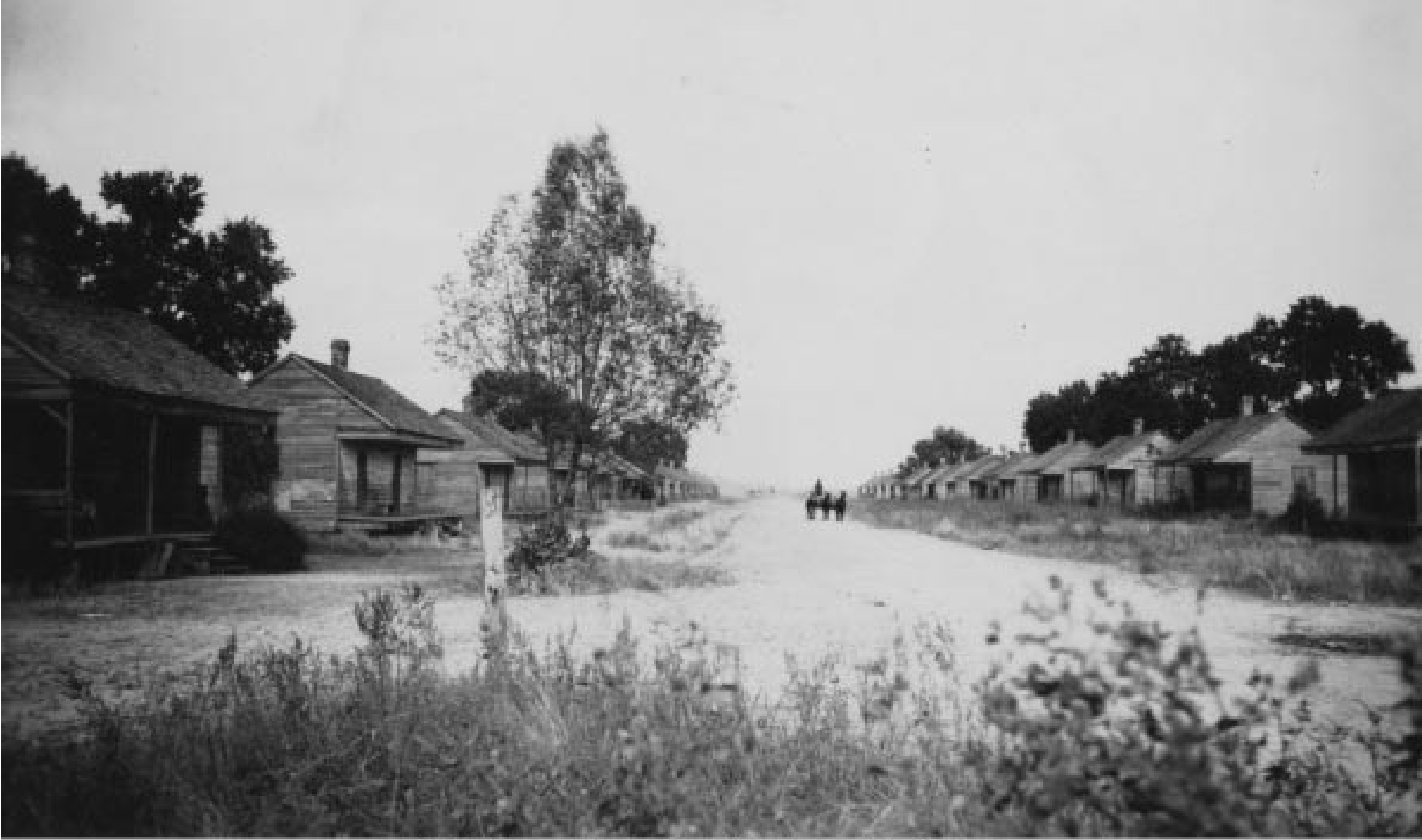
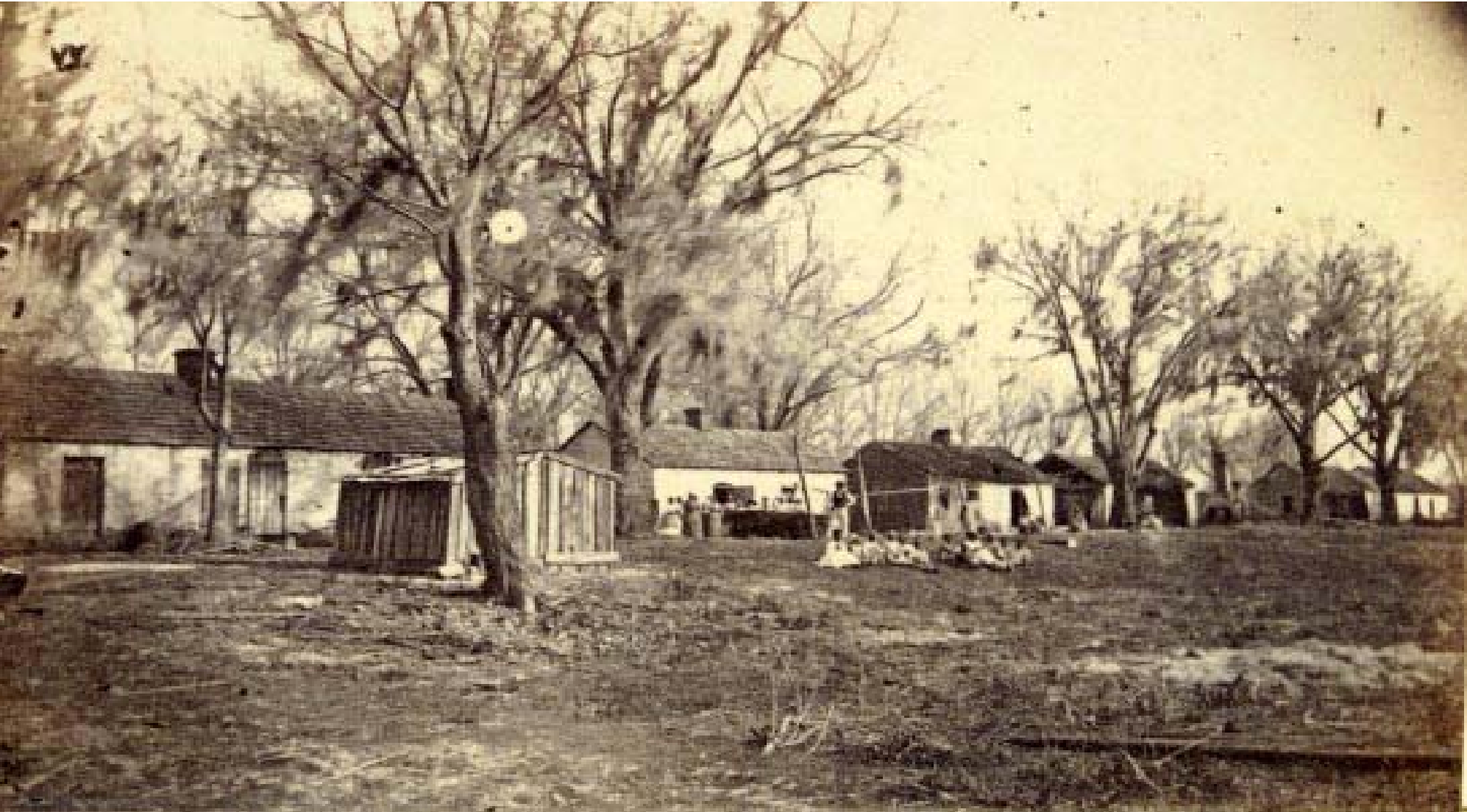
Although none of the former slaves interviewed had the surname Guidry (or a variant of it), several of the interviews mentioned a person named Guidry as the slave owner (master). These are:
Agatha Babino
Born a slave near Carencro, LA, Agatha Babino was living at Beaumont, TX when interviewed. She had lived near Carencro, LA most of her early life with a short stay in Opelousas, LA after marrying. About 25 years before the interview, she moved to Beaumont, TX.
Agatha was a slave of Ogis Guidry and his wife Laurentine and was the daughter of Dick and Clarice Richard from the Carolinas and slaves of Placide Guilbeau. She married Tessifor (Telesphore) Babino (Babineaux) and had twelve children. In her testimony Agatha gave a vivid description of her life as a slave during the Civil War era. According to Agatha, her master was very cruel - beating the slaves and providing only rudimentary living quarters and minimal food. Ogis Guidry had a large, one-story house with gallery and brick pillars. He owned many acres of land and had about 50 slaves.
Mentioned in the interview was a Dr. Guidry, a relative of Ogis Guidry, who told the slaves of their freedom after the Civil War. Also mentioned was Charlie Guidry, a judge, who married the slaves. {From the information provided in the interview, we know that Ogis Guidry and his wife Laurentine were Augustin Guidry and Marie Leontine Guilbeaux, the sister of Placide Guilbeaux, who owned Agatha Babino’s parents.
Genealogy of Augustin Guidry, slaveholder of Agatha Babino’s parents
- Augustin Guidry m. Marie Leontine Guilbeaux (sister of Placide Guilbeaux)
- Augustin Guédry m. Adelaide Robichaud
- Pierre Guédry m. Marie Claire Babin
- Augustin Guédry m. Jeanne Hébert
- Claude Guédry m. Marguerite Petitpas
The Dr. Guidry mentioned probably was Dr. Alexis Onesime Guidry, born in 1816 and the husband of first Celestine Laperle Dupre and then Palmyre Dupre. He was a physician and planter in St. Landry Parish, LA. He was the son of Charles Alexis Onesime Guidry and Julie Euphrasie Potier. Augustin Guidry, husband of Marie Leontine Guilbeaux, and Dr. Alexis Onesime Guidry were first cousins once removed.}
Lou Turner (also called Lou Eumann)
Born a slave at the Richard West plantation at Rosedale, TX near Beaumont, Lou Turner spent her entire life within three miles of the Beaumont, TX. She lived in Beaumont at the time of the interview.
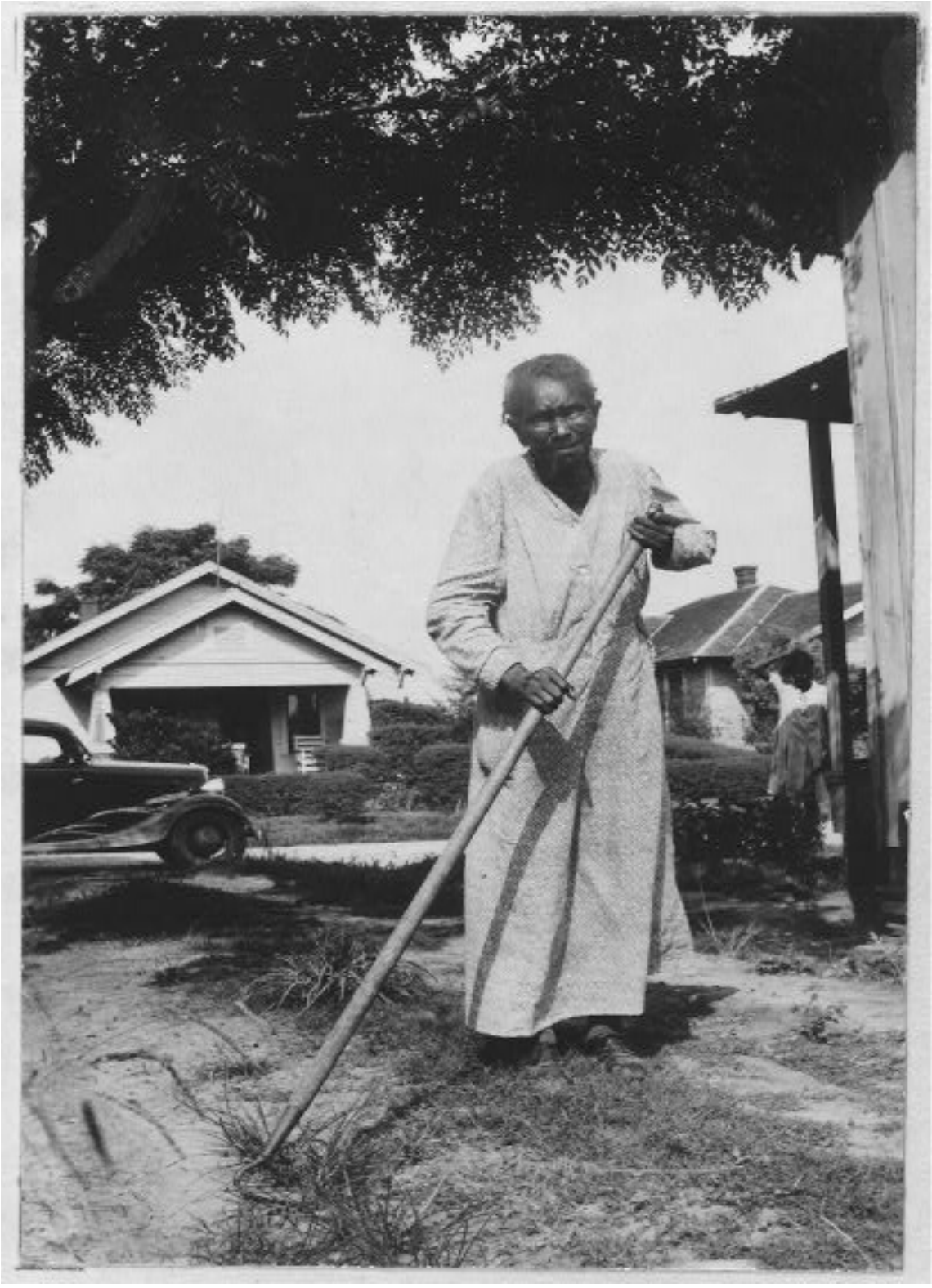
Lou Turner was owned by Richard West and his wife Mary Guidry. They had a plantation near Rosedale, TX where Lou was a slave. The West family had only a few slaves. Lou’s parents were Sam Marble from Mississippi and his wife Maria. Lou discusses her life as a young girl living in the Big House with the master’s wife treating her very kindly. She indicated that Mary Guidry was a ‘doctor’ and would go to other plantations to treat the folks there. The children of Richard West and Mary Guidry were grown, had moved away and had children of their own. Lou Turner would get to go with Mary Guidry to visit the grandchildren and would play with them. Richard West generally treated his slaves well especially before the Civil War.
After being freed, Lou Turner married George Turner in Beaumont when she was 19 years old. They had one daughter Sarah.
{Richard West, born at Mansura in Avoyelles Parish, LA on 31 July 1802 and the son of Thomas West and Susanne ‘Nancy’ Folk, was married three times: (1) Ann Foreman, daughter of Edward Foreman and Nancy Perry, on 27 March 1819 in Opelousas, LA; (2) Sara Lyons, daughter of Jean Michael Lyons and Mary Hayes, on 22 Jun 1824 in Lafayette, LA and (3) Mrs. Mary Guidry on 30 May 1854 in Jefferson County, TX. The wedding license of Richard West and Mary Guidry has “Mrs. Mary Guidry” indicating that Mary Guidry may have been married previously and Guidry was her former husband’s surname.}
Louis Evans
Born near Grand Coteau, LA, Louis Evans was living at Beaumont, TX at the time of the interview.
Louis Evans was a slave of John Smith and his wife Carmellite who lived in a six-room, sawed-plank house on cypress pillars about three feet off the ground. Smith owned 140 acres of land on which he grew corn, cotton and potatoes and raised cattle and horses. John Smith owned about ten slaves - seven were Louis Evans, his brothers and sisters and his father Tom Evans and mother Rachel. From his early youth Louis was the personal servant of John Smith and was treated very well. His master treated all the slaves well. In the interview Louis discusses his life as a young slave and his observations of the Civil War around Grand Coteau, LA.
During the interview Louis Evans briefly discussed a slave Harry owned by Joe Guidry. Mr. Guidry let Harry work for money at times and Harry was able to buy his freedom and some land. He also mentioned that during the Civil War one of the Guidry boys deserted from the army. He was caught and punished. Young Guidry’s father borrowed money from another man during the Civil War. After the War the lender seized all of Guidry’s property except Harry’s land because Guidry’s son had deserted.
When he was 20 years old, Louis Evans married a quadroon lady Cora Gindry, who was the daughter of Old Dr. Gindry.
{In the interview Cora Guidry is called Cora Gindry. Here Gindry is a variant of the surname Guidry. A quadroon was a person of mixed race with ¼ African ancestry and ¾ Caucasian ancestry.
Louis Evans was the son of Tom Evans and Rachel. Cora Guidry probably was the daughter of Alexis Onesime Guidry, a physician and planter in St. Landry Parish, LA, and a mulatto woman (possibly Virginia Barker). The identity of the other Guidry’s mentioned in the interview are not known.
Genealogy of Cora (Corinne) Guidry
- Cora (Corinne) Guidry m. Louis Evans
- Alexis Onesime Guidry with mulatto woman (Wives: Celestine Laperle Dupre & Palmyre Dupre - sisters)
- Charles Alexis Onesime Guidry m. Julie Euphrasie Potier
- Louis David Guédry m. Marie Modeste Borda
- Pierre Guédry m. Marie Claire Babin
- Augustin Guédry m. Jeanne Hébert
- Claude Guédry m. Marguerite Petitpas
Orelia Alexie Franks
Born a slave on the plantation of Valerian Martin near Opelousas, LA, Orelia Alexie Franks lived in Beaumont, TX for many years before her interview there.
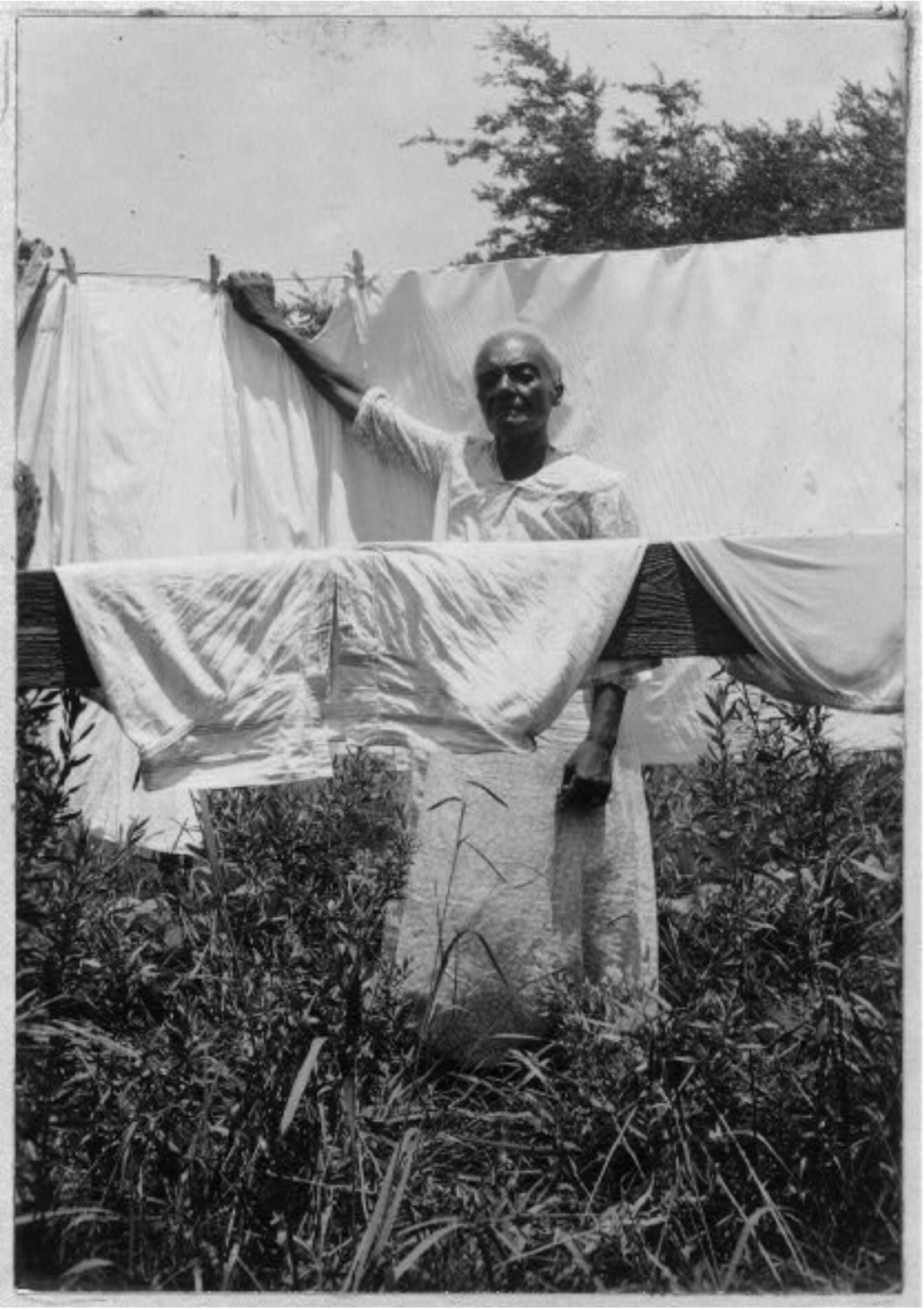
She was the slave of Valerian Martin and his wife Malite Guidry. Her parents were Alexis Franks and Fanire Martin. Valerian Martin had a large plantation on which he raised sugar cane and cotton as wells as hogs and beef. He treated his slaves very well, checking on them every morning and ensuring they got treated properly if sick. He did not allow anyone to beat his slaves. The slaves had rudimenttary quarters, but ate well and enjoyed holidays together. Valerian Martin provided a cabin for his slaves to have prayer meetings. In the interview Orelia discusses several aspects of her life as a slave.
{Valerian Martin was André Valerien Martin, son of Jean André Martin and Gertrude Sonnier. Malite Guidry was Emelie Guidry, daughter of Louis David Guédry and Marie Modeste Bordat.
Genealogy of Emelie Guidry, slaveholder of Orelia Alexie Franks
- Emelie Guidry m1. Alexandre Dugas; m2. André Valerien Martin
- Louis David Guédry m. Marie Modeste Bordat
- Pierre Guédry m. Marie Claire Babin
- Augustin Guédry m. Jeanne Hébert
- Claude Guédry m. Marguerite Petitpas
[Note: Emelite Guidry and Augustin Guidry (husband of Marie Leontine Guilbeaux) were first cousins.]
Amos Lincoln
Born a slave on the Elshay Guidry plantation in the lower delta country of Louisiana about 50 miles south of New Orleans, Amos Lincoln was living in Beaumont, TX during the interview. He had lived in Beaumont for 52 years.
While a slave, Amos Lincoln was owned by Elshay Guidry. During the interview Amos stated that Elshay Guidry was quite mean and whipped his many slaves. The slaves had very rudimentary cabins with dirt floors and very rustic furniture. They hunted, trapped and gathered most of their food. Amos married twice - first to Massage Florshann and then to Annie. After being set free, he sharecropped briefly in Louisiana and then moved to Texas where he again sharecropped.
Mary Scranton
Born near Lafayette, LA, Mary Scranton was living in Texas at the time of the interview.
Mary Scranton remembered that her first owner was called Valiere, but did not recall his last name. Her second owner was LaSan Guidry, who was very good to his slaves - always ensuring they could practice their religion and never mistreating them.
Mary’s parents were Joseph Johnson and his wife Clara Bell. When she was about twenty, she married George Scranton in Louisiana. They had five children together before George died in Port Arthur, TX.
The LaSan Guidry mentioned in the interview was very probably Lessin Guidry, born 1829 in Lafayette Parish, LA and son of Alexandre Guidry and Marie Carmelite Broussard. He married Louisianaise Breaux, daughter of Valiere Breaux and Marcelite Fostin, in 1852 in Lafayette, LA. They had five children including Marie Eusiede Guidry, born in 1855. The first slave owner mentioned in the interview may have been Valiere Breaux, the father of Lessin Guidry’s wife Louisianaise Breaux. He actually would have been the owner of Mary Scranton’s parents, not Mary Scranton, as Valiere Breaux died before 1853 and Mary Scranton was born in 1859.
Genealogy of Lessin Guidry
- Lessin (Laisin, Lessaint, Lessaurt, Laison) Guidry m. Louisianaise Breaux
- Alexandre Lessin Guidry m. Marie Carmelite Broussard
- Joseph Guidry m. Scholastique Hébert
- Pierre Guédry m. Marie Claire Babin
- Augustin Guédry m. Jeanne Hébert
- Claude Guédry m. Marguerite Petitpas
Other Afro-Louisiana Resources
A new database on Ancestry.com is the ” New Orleans, Louisiana, Slave Manifests, 1807-1860 ” 13 . Although the international slave trade was banned in 1807, within the United States slaves could still be marketed. The 1807 law banning the international slave trade also required that captains of vessels carrying slaves within the continental waters to prepare a manifest of their slave cargo. These are the surviving slave manifests prepared for ships entering and leaving the Port of New Orleans. Some inward and outward manifests have been lost over time. The records are not indexed at this time so each individual manifest must be searched. There are 29,875 individuals on the manifests.
http://search.ancestry.com/search/db.aspx?dbid=1562 (New Orleans Slave Manifests)
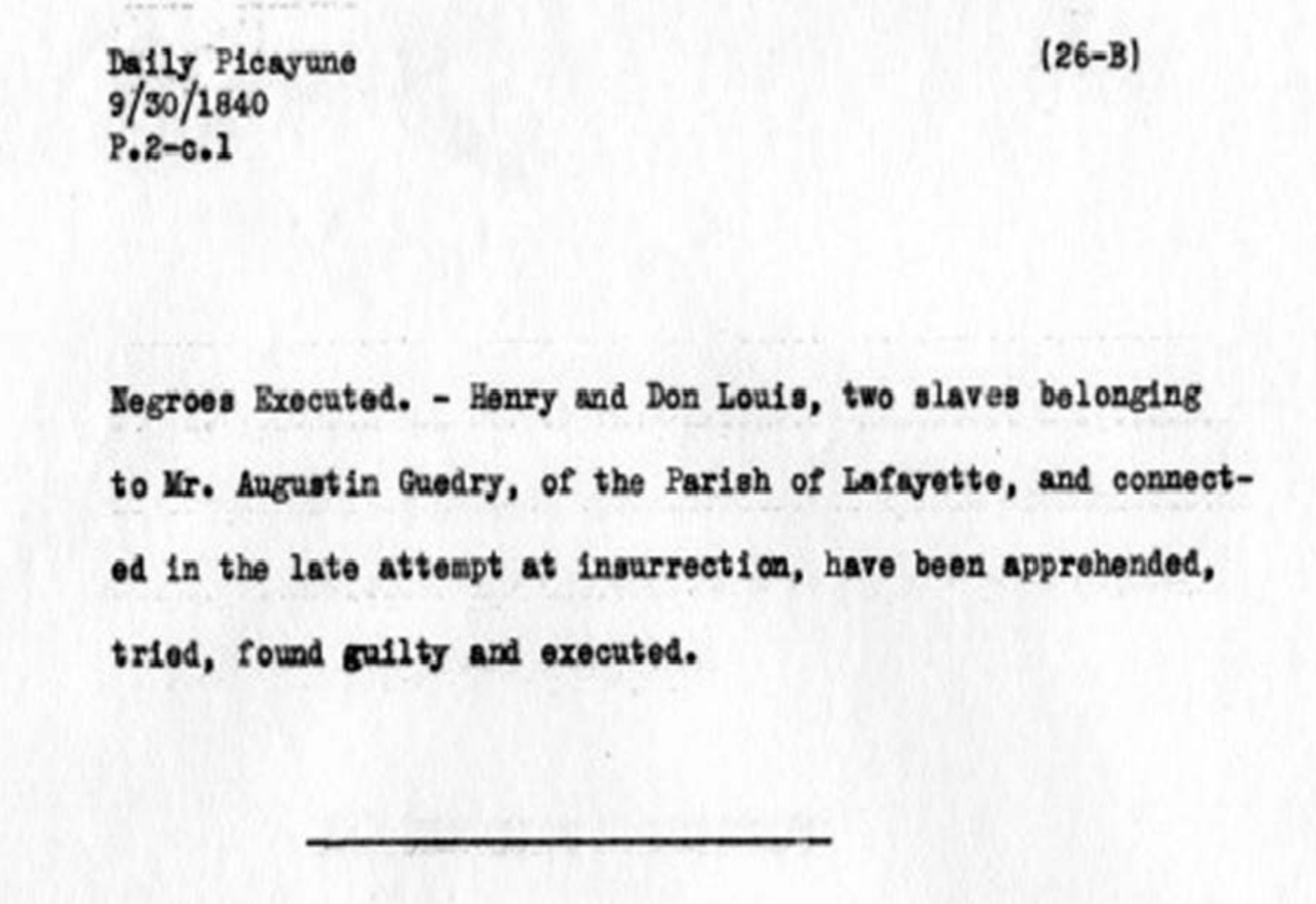
The “ Louisiana Digital Library ” 14 is a massive database containing over 144,000 photographs and documents on all aspects of Louisiana history and culture from the 1500’s to the present day. Within the digitized collection are several hundred photographs and documents on slaves, the slave trade and slavery in Louisiana. Some are of a general nature, but many name the individuals and provide information on their lives. For best results use the “Search All Collections” feature on the homepage. See below for an example of one document from this collection on two slaves Henry and Don Louis belonging to Augustin Guedry. The original documents can be downloaded from the website at:
http://louisdl.louislibraries.org/ (Louisiana Digital Library)
The “ Digitial Library on American Slavery ” 15 contains detailed information on over 150,000 slaves, free people of color and whites. The information was gleaned from over 17,000 legislative and county petitions as well as wills, inventories, bills of sale, court proceedings and other civil government documents filed between 1775 and 1867 in 15 southern states and the District of Columbia. There are six entries for Guidry (no other variants mentioned) in the database - Cilesie Savoy Guidry, Firmin Guidry, Louis Guidry, Onezime Louis Guidry, Onezime Guidry Esq. and Theodule Guidry. The “Digital Library on American Slavery” is at:
http://library.uncg.edu/slavery/about.aspx (Digital Library on American Slavery)
A team of international historians has compiled a superb website entitled “ The Trans-Atlantic Slave Trade Database ” 16 with information on almost 35,000 slave voyages from 1501 to 1866 destined for the United States and six other regions of the world. The names provided in this database are the African names of persons being transported as well as the names of the ship captains. Although not specific to Louisiana, this database provides a superb, detailed overview of slave trade from Africa to the United States and other regions of the world. It is available at:
http://www.slavevoyages.org/tast/index.faces (Trans-Atlantic Slave Trade Database)
Another excellent resource for Afro-American History and Genealogy is the AfriGeneas (African Ancestored Genealogy) website and particularly its AfriGeneas Library 17 at
http://www.afrigeneas.com/library/ (AfriGeneas Library)
There are many sources of information on slaves and slavery in Louisiana in texts and on the internet. The above are but a select group of the better ones readily available on the internet. With the expanded resources available today one can now trace his African ancestry well beyond the post-Civil War period. Additionally, there are professional genealogists specializing in Afro-Louisiana Genealogy with whom one can contract to get help.
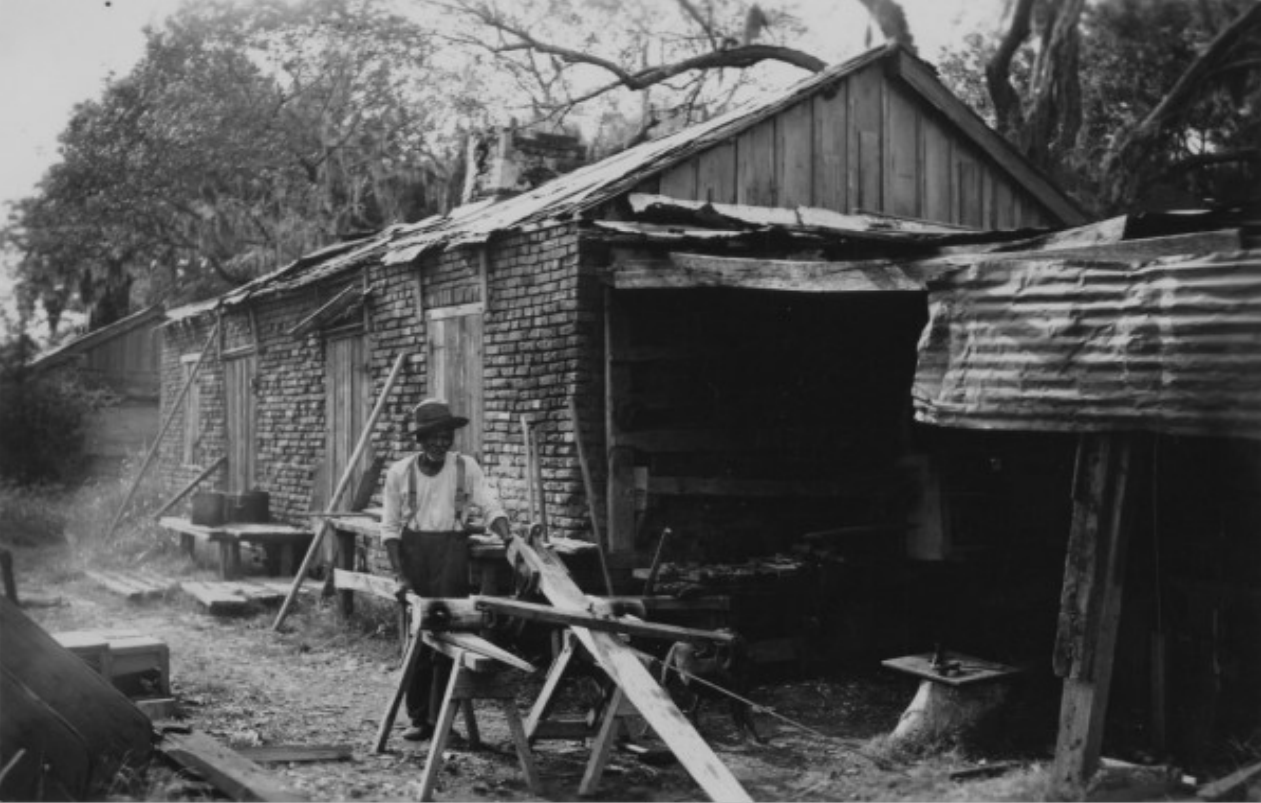
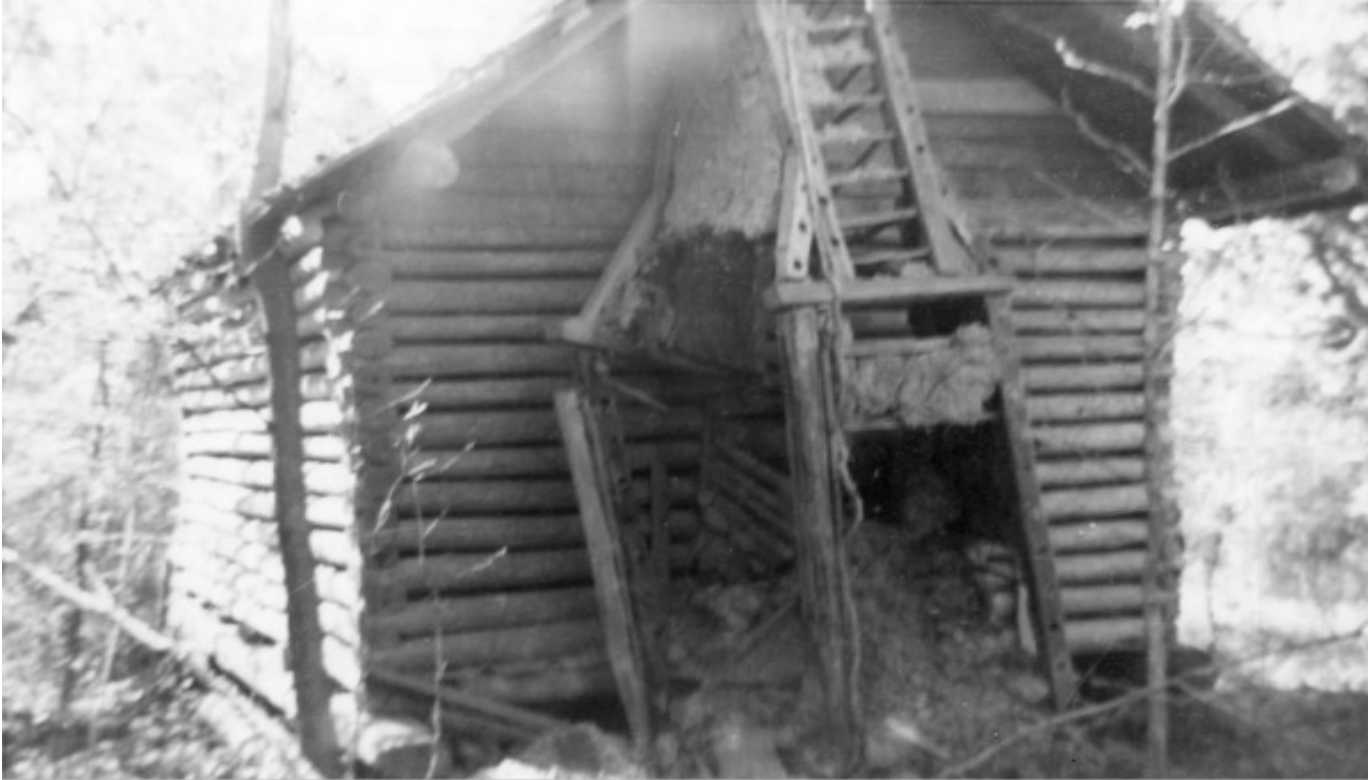
Selected Slave Narratives
Slave Narratives - Agatha Babino
420280
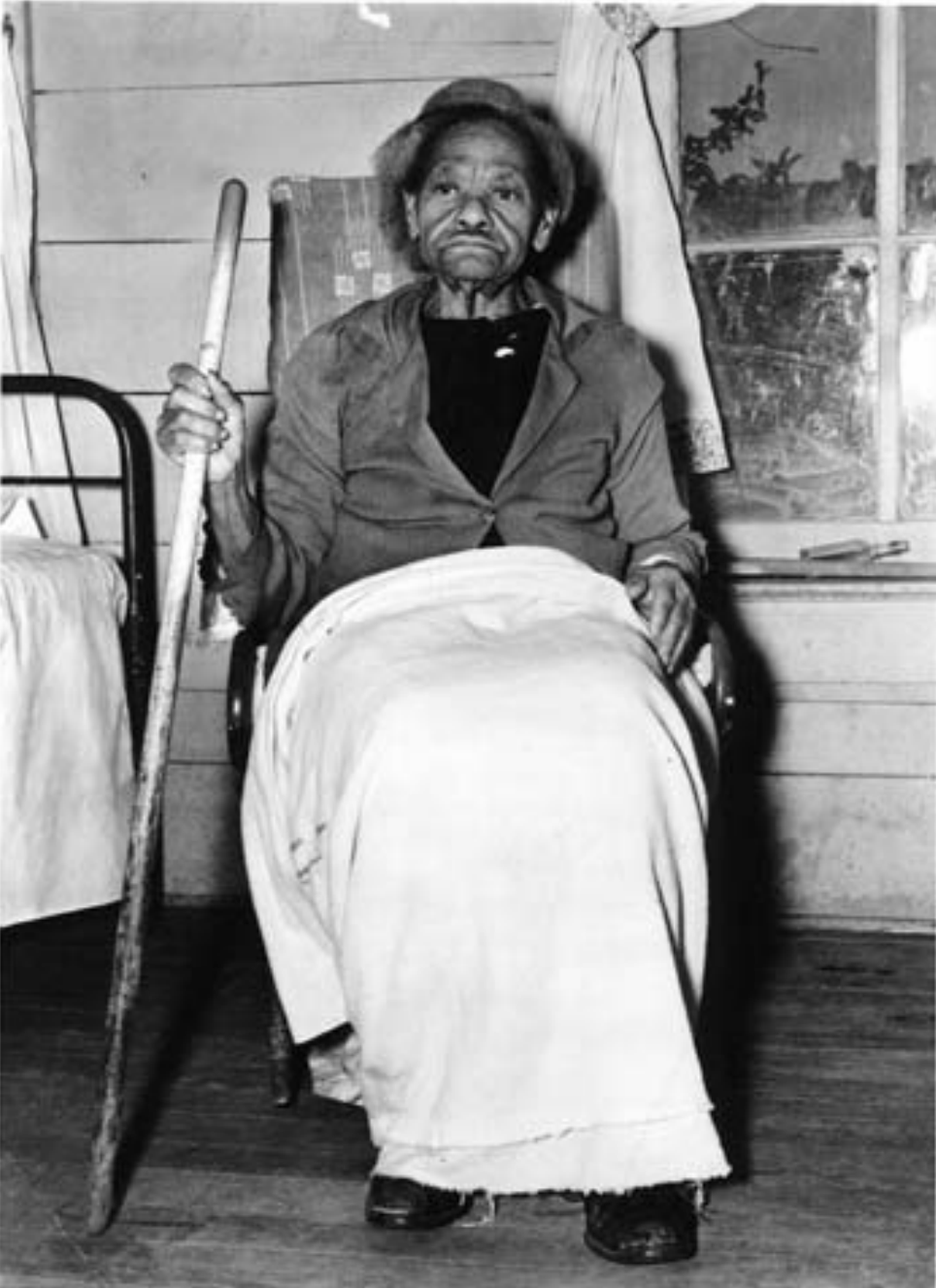
AGATHA BABINO, born a slave of Ogis Guidry, near Carenco, Louisiana, now lives in a cottage on the property of the Blessed Sacrament Church, in Beaumont, Texas. She says she is at least eighty-seven and probably much older.
"Old Marse was Ogis Guidry. Old Miss was Laurentine. Dey had four chillen, Placid, Alphonse and Mary and Alexandrine, and live in a big, one-story house with a gallery and brick pillars. Dey had a big place. I 'spect a mile 'cross it, and fifty slaves.
"My mama name was Clarice Richard. She come from South Carolina. Papa was Dick Richard. He come from North Carolina. He was slave of old Placid Guilbeau. He live near Old Marse. My brothers was Joe and Nicholas and Oui and Albert and Maurice, and sisters was Maud and Celestine and Pauline.
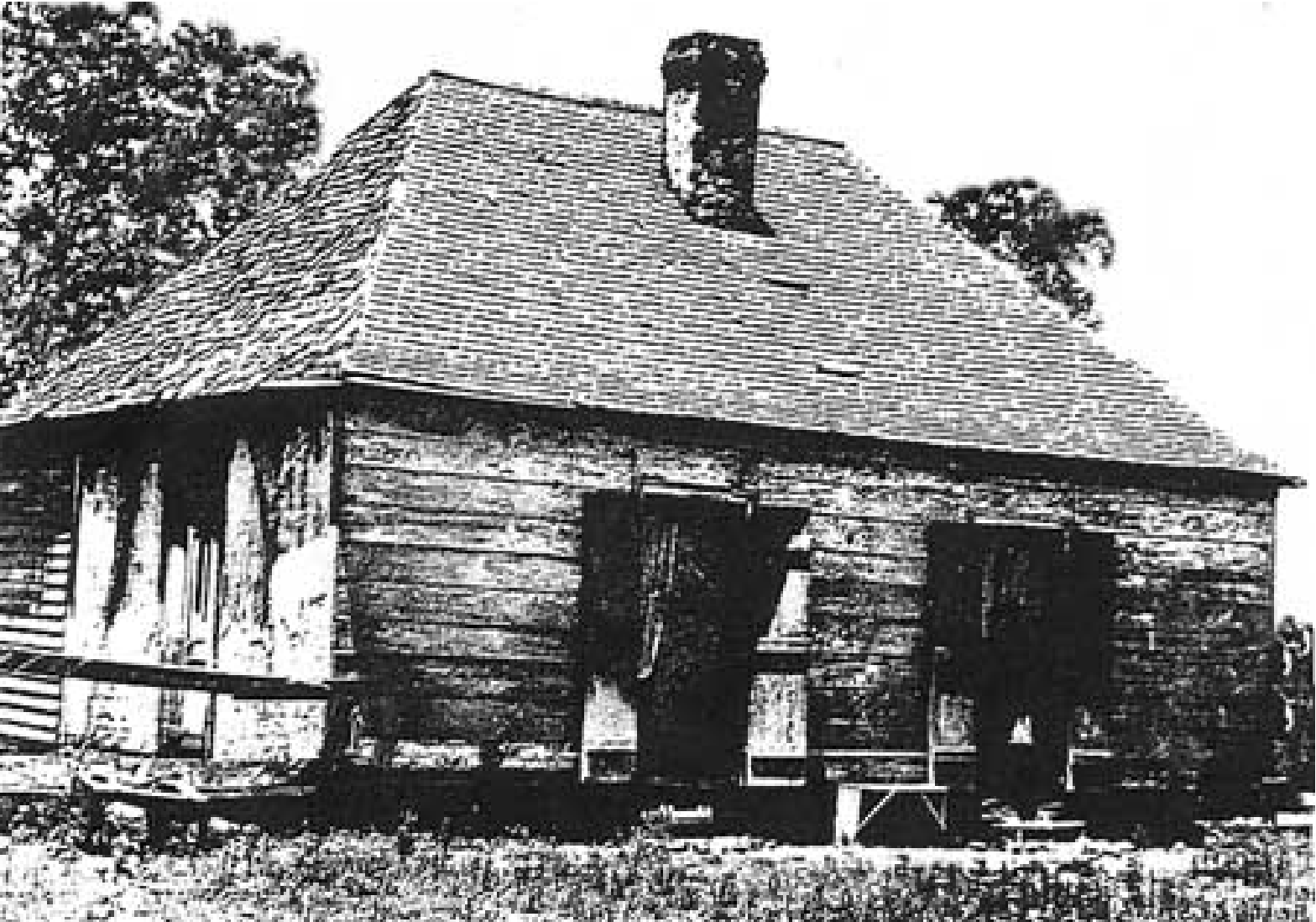
"Us slaves lived in shabby houses. Dey builded of logs and have dirt floor. We have a four foot bench. We pull it to a table and set on it. De bed a platform with planks and moss.
"We had Sunday off. Christmas was off, too. Dey give us chicken and flour den. But most holidays de white folks has company. Dat mean more work for us.
"Old Marse bad. He beat us till we bleed. He rub salt and pepper in. One time I sweep de yard. Young miss come home from college. She slap my face. She want to beat me. Mama say to beat her, so dey did. She took de beatin' for me.
"My aunt run off 'cause dey beat her so much. Dey brung her back and beat her some more.[Pg 38]
"We have dance outdoors sometime. Somebody play fiddle and banjo. We dance de reel and quadrille and buck dance. De men dance dat. If we go to dance on 'nother plantation we have to have pass. De patterrollers come and make us show de slip. If dey ain't no slip, we git beat.
"I see plenty sojers. Dey fight at Pines and we hear ball go 'zing—zing.' Young marse have blue coat. He put it on and climb a tree to see. De sojers come and think he a Yankee. Dey take his gun. Dey turn him loose when dey find out he ain't no Yankee.
"When de real Yankees come dey take corn and gooses and hosses. Dey don't ask for nothin'. Dey take what dey wants.
"Some masters have chillen by slaves. Some sold dere own chillen. Some sot dem free.
"When freedom come we have to sign up to work for money for a year. We couldn't go work for nobody else. After de year some stays, but not long.
"De Ku Klux kill niggers. Dey come to take my uncle. He open de door. Dey don't take him but tell him to vote Democrat next day or dey will. Dey kilt some niggers what wouldn't vote Democrat.
"Dey kill my old uncle Davis. He won't vote Democrat. Dey shoot him. Den dey stand him up and let him fall down. Dey tie him by de feet. Dey drag him through de bresh. Dey dare his wife to cry.
"When I thirty I marry Tesisfor Babino. Pere Abadie marry us at Grand Coteau. We have dinner with wine. Den come big dance. We have twelve chillen. We works in de field in Opelousas. We come here twenty-five year ago. He die in 1917. Dey let's me live here. It nice to be near de church. I can go to prayers when I wants to.
Slave Narratives - Orelia Alexie Franks
4200002
ORELIA ALEXIE FRANKS was born on the plantation of Valerian Martin, near Opelousas, Louisiana. She does not know her age, but thinks she is near ninety. Her voice has the musical accent of the French Negro. She has lived in Beaumont, Texas, many years.
"I's born on Mr. George Washington's birthday', the twenty-second of February but I don't know what year. My old massa was Valerian Martin and he come from foreign country. He come from Canada and he Canada French. He wife name Malite Guidry. Old massa a good Catholic and he taken all the li'l slave chillen to be christen. Oh, he's a Christian massa and I used to be a Catholic but now I's a Apostolic, but I's christen in St. Johns Catholic Church, what am close to Lafayette, where I's born.
"My pa name Alexis Franks and he was American and Creole. My ma name Fanire Martin and I's raise where everybody talk French. I talks American but I talks French goodest.
"Old massa he big cane and cotton farmer and have big plantation and raise everything, and us all well treat. Dey feed us right, too. Raise big hawg in de pen and raise lots of beef. All jes' for to feed he cullud folks.
"Us quarters out behind de big house and old massa come round through de quarters every mornin' and see how us niggers is. If us sick he call nuss. She old slavery woman. She come look at 'em. If dey bad sick dey send for de doctor. Us house all log house. Dey all dab with dirt 'tween de logs. Dey have dirt chimney make out of sticks and dab with mud. Dey [Transcriber's Note: unfinished sentence at end of page] [Pg 61]"Lots of time we eat coosh-coosh. Dat make out of meal and water. You bile de water and salt it, den put in de cornmeal and stir it and bile it. Den you puts milk or clabber or syrup on it and eat it.
"Old massa have de graveyard a purpose to bury de cullud folks in. Dey have cullud preacher. Dey have funeral in de graveyard. Dat nigger preacher he a Mef'dist.
"Old massa son-in-law, he overseer. He 'low nobody to beat de slaves. Us li'l ones git spank when we bad. Dey put us 'cross de knee and spank us where dey allus spank chillen.
"Christmas time dey give big dinner. Dey give all de old men whiskey. Everybody have big time.
"Dey make lots of sugar. After dey finish cookin' de sugar dey draw off what left from de pots and give it to us chillen. Us have candy pullin'.
"Dey weave dey own cloth. Us have good clothes. Dey weave de cloth for make mattress and stuff 'em with moss. Massa sho' believe to serve he niggers good. I see old massa when he die. Us see old folks cry and us cry, too. Dey have de priest and burn de candles. Us sho' miss old massa.
"I see lots of sojers. Dey so many like hair on your head. Dey Yankees. Dey call 'em bluejackets. Dey a fight up near massa's house. Us climb in tree for to see. Us hear bullets go 'zoom' through de air 'round dat tree but us didn't know it was bullets. A man rid up on a hoss and tell massa to git us pickaninnies out dat tree or dey git kilt. De Yankees have dat battle and den sot us niggers free.[Pg 62]
"Old massa, he de kind man what let de niggers have dey prayer-meetin'. He give 'em a big cabin for dat. Shout? Yes, Lawd! Sing like dis:
"'Mourner, fare you well,
Gawd 'Mighty bless you,
Till we meets again.'"Us sings 'nother song:
"'Sinner blind,
Johnnie, can't you ride no more?
Sinner blind.
Your feets may be slippin'
Your soul git lost.
Johnnie, can't you ride no more?
Yes, Lawd,
Day by day you can't see,
Johnnie, can't you ride no more?
Yes, Lawd.'"
Slave Narratives - Lou Turner
420001
Lou Turner, 89, was born at Rosedale, near Beaumont, Texas, on the Richard West plantation. She has spent her entire life within three miles of Beaumont, and now lives in her own little home, with her daughter, Sarah.
"I hears you been 'round to see me befo', but you ain't never gwine find me to home. I sho' love to go 'round visitin'. You know dey say iffen you treats the cat too good, you ain't never know where the cat is.
"I's gwine on seventeen year old when freedom come. I's born right here near Beaumont, on the big road what they calls the Concord Road, in the place what they calls Rosedale. I's a growed-up young lady befo' I ever sees Beaumont. I's gwine on 89 year old now.
"Richard West, he's my massa and Mary Guidry she my missy. Dey used to call her the 'Cattle King.' Dey have a big plantation and jes' a few slaves. Dey raises my mammy since she eleven year old. Her name Maria and she marry Sam Marble. He come from Miss'ippi.
"I stay up at the big house and missy fix my plate when she fix hers. God bless her heart, she kind to me, I know now I's sassy to her but she didn't pay me no 'tention 'cause I's li'l. I slep' on a trundle bed by missy's side and I git so smart I allus smell my bed to see iffen dey puts nice, clean sheets on mine like dey did on hers. Sometime I play sick, but old missy a good doctor and she gimme beefoot oil and it so nasty I quit playing off. She French and she so good doctor they send for her to other folks houses.
"Old missy was real rich. I's taken her money out of de wardrobe ane make tall playhouse out of gold and silver money. Iffen she have to buy somethin' she have to come and borrow it from me. Us allus has to figger how to take dat money out of de corners so de house won't fall down. I cried and cried iffen she tored it up.
"She'd take me with her when she go to see her grandchillen in de French settlement. Us come in buggy or hack and bring jelly and money and things. I thought I's gwine to Heaven, 'cause I gits to play with li'l chillen. Us play 'ring place', dat's draw a ring and hop 'round in it. Us jump rope and swing. Dey have a hair rope swing with a smooth board in it so it ain't scratch us behin'.
"Old missy so kind but what got 'way with me, I couldn't go to school. I beg and beg, but she kep' sayin', 'Some day, some day,' and I ain't never sit in a school in my life.
"Old massa didn't work 'em hard. He make 'en come in when the sun got bad, 'cause he feared dey git sunstroke. He mighty good in early days, but when he figger dey gwine loose he slaves he start bein' mean. He split 'em and sold 'em, tryin' to make he money out of 'em.
"De house what the white folks live in was make out of logs and moss and so was the quarters houses. Better'n New Orleans, dem quarters was. Us slaves have de garden patch. The white folks raises hogs and kilt 'em by the twenties. Dey smoke hams and shoulders and chittlin's and sich and hang 'em up in the smokehouse. Us allus have plenty to eat and us have good, strong clothes. Missy buy my dresses separate, though. She buy me pretty stripe cotton dress.
"Bout the only work I ever done was help watch the geese and turkeys and fill the quilts. I larn to card, too. Old missy never whip me much, she jes' like to scare me. She whip me with big, tall straw she git out the field or wet a towel and whip my legs. My old massa done a trick I never forgit while I's warm. I's big gal 'bout sixteen year old and us all 'lone on the place. He tells me to crawl under the corncrib and git the eggs. I knowed dey ain't nothin' dere but the nest egg, but I have to go. When I can't find nothin' he pull me out backwards by the feet and whip me. When old missy come home I ain't know no better'n to tell her and she say she ought to kill him, but she sho' fix him, anyway. He say she spile me and dat why he whip me.
"Old missy taken to preachin'. She was real good preacher. Dey have de big hall down the center of the house where they have services. A circuit rider come once a month and everybody stop workin' even if it wasn't Sunday.
"When war was on us there wasn't no sojers 'round where I was, but dat battle on Atchafalia shook all the dishes off the dresser and broke 'em up. Jes' broke up all the fine Sunday and company dishes.
"After de trouble my mammy have gettin' me 'way from there when freedom come, she gits me after all. Old missy have seven li'l nigger chillen what belong to her slaves, but dey mammies and daddys come git 'em. I didn't own my own mammy. I own my old missy and call her 'mama'. Us cry and cry when us have to go with us mammy. I 'members how old missy rock me in her arms and sing to me. She sing dat 'O, Susanna' and telt me a story:
"'Dere a big, old brown bear what live in de woods and she have lots of li'l cub bears and dey still nussin' at de breast. Old mama bear she out huntin' one day and she come by de field where lots of darkies workin' and dere on a pallet she see fat, li'l pickaninny baby. Mama bear she up and stole dat li'l pickaninny baby and takes it home. It hongry but after she git all de cub bears fed, dere ain't no milk left for de nigger baby. Mama bear git so 'sasperated she say to her babies, 'Go long, you go way and play.' Dan she feed de li'l pickaninny baby and dat how she raise dat nigger baby.'
"Now, every time old missy come to dat place in de story, she start laughin', 'cause I allus used to ask her.
"'How come dey didn't no hair grow on dat baby.'"
References
- "Gwendolyn Midlo Hall", Wikipedia, the Free Encyclopedia ; Internet at: http://en.wikipedia.org/wiki/Gwendolyn_Midlo_Hall
- "Gwendolyn Midlo Hall"; ibiblio.org ; Internet at: http://www.ibiblio.org/laslave/hall/vitajune2007.html
- Hall, Gwendolyn Midlo; Databases for the Study of Afro-Louisiana History and Genealogy (Louisiana State University Press; Baton Rouge, LA; March, 2000). Compact Disk.
- Hall, Gwendolyn, Midlo; Afro-Louisiana History and Genealogy, 1719-1820 (ibiblio.org; University of North Carolina; Chapel Hill, NC; November 2001). Searchable Internet Database: http://www.ibiblio.org/laslave/
- Hall, Gwendolyn Midlo; Louisiana Slave Records, 1719-1820 (Ancestry.com; Ancestry.com Operations, Inc.; Provo, UT; 2003). Searchable Internet Database: http://search.ancestry.com/search/db.aspx?dbid=7383
- Hall, Gwendolyn Midlo; Louisiana Freed Slave Records, 1719-1820 (Ancestry.com; Ancestry.com Operations, Inc.; Provo, UT; 2003). Searchable Internet Database: http://search.ancestry.com/search/db.aspx?dbid=7382 .
- Hall, Gwendolyn Midlo; The Louisiana Slave Database and the Database: 1719-1820 (Afrigeneas Library; Atlanta, GA). Internet Site: http://www.afrigeneas.com/library/louisiana/
- Works Progress Administration; Slave Narratives: A Folk History of Slavery in the United States from Interviews with Former Slaves (Works Progress Administration; Washington, D.C.; 1941). Microfilm, 17 volumes.
- National Digital Library Program (NDLP), Library of Congress: Born in Slavery: Slave Narratives from the Federal Writers' Project, 1936-1938 ; Searchable Internet Database: http://memory.loc.gov/ammem/snhtml/snack.html
- Tyler, Ronnie C. & Murphy, Lawrence R., editors; The Slave Narratives of Texas (Encino Press; Austin, TX; 1974).
- Clayton, Ronnie W.; Mother Wit: The Ex-Slave Narratives of the Louisiana Writers'Project (Peter Lang; New York, NY; 1990).
- Works Progress Administration, et al.; "Slave Narratives" (Ancestry.com; Ancestry.com Operations, Inc.; Provo, UT; 2003). Searchable Internet Database: http://search.ancestry.com/search/db.aspx?dbid=4342
- National Archives and Records Administration; New Orleans, Louisiana, Slave Manifests, 1807-1860 (Ancestry.com; Ancestry.com Operations, Inc.; Provo, UT; 2003). Searchable Internet Database: http://search.ancestry.com/search/db.aspx?dbid=1562
- Louisiana Library Network; Louisiana Digital Library (State Library of Louisiana; Baton Rouge, LA; 1992). Searchable Internet Database: http://louisdl.louislibraries.org/
- ERIT, University Libraries, UNCG; Digital Library on American Slavery (University of North Carolina; Greensboro, NC; 1993). Searchable Internet Site: http://library.uncg.edu/slavery/about.aspx
- Eltis, David & Halbert, Martin; The Trans-Atlantic Slave Trade Database (Emory University; Atlanta, GA; 2008).
- Nelson, Valencia King (webmaster); AfriGeneas (African Ancestored Genealogy) Library (Afrigeneas Library; Atlanta, GA). Searchable Internet Site: http://www.afrigeneas.com/library/